A lot of Selden ranches were built with a single-width driveway and a one-car garage. Then the garage filled with tools and bikes, a teenager started driving, and now somebody parks on the lawn or out on the street. A side parking pad fixes that. It is a short, simple slab or paver area along the side of the house that holds one more car off the grass and off the road.
It is also one of the easier concrete jobs to get wrong, because it sits close to the property line and close to the house. This guide walks through what to check before you build, how concrete driveway and pad work differs from pavers for this use, and how to keep rainwater on your own side of the fence.
What a side parking pad actually is
A side pad is an extension of the driveway that runs along the side of the house, usually between the house wall and the side property line. It is often one car wide and one car long, sometimes a little longer so a car can pull fully clear of the garage door.
Most of the time the pad connects to the existing driveway at the front corner of the house. Sometimes the existing apron at the street is too narrow and needs to be widened so the car can swing in without cutting across the lawn. That second case matters, because a change at the curb is a different kind of approval than a change in your yard.
Check the setbacks and the curb cut first
Selden is in the Town of Brookhaven, and paved area, side-yard setbacks and curb cuts all have rules. Those rules depend on your zoning, the lot width and how much of the property is already covered by hard surface. We are not going to quote a number here because it changes by lot and the Town is the source of truth. Call or visit the Town of Brookhaven Building Division with your survey and ask three things.
First, how close to the side property line can a parking surface be. Second, whether a new or wider apron at the curb needs a separate permit from the Highway Department. Third, whether the extra pavement pushes the lot over a coverage limit that would need a variance.
If the apron is part of the job, read our post on the Brookhaven driveway apron and highway permit. It covers who you talk to and what the inspector looks at.
Bring your survey
The survey shows the property line, the house footprint and any easements. A fence is not a property line. On many Selden lots the fence is a foot or two off the real line, and that foot is exactly where a side pad wants to sit. We locate the pins or work off the survey before we set forms.
Concrete or pavers for a parking pad
Both can carry a car for decades. The right one depends on the lot, the drainage and how you want it to look.
Concrete
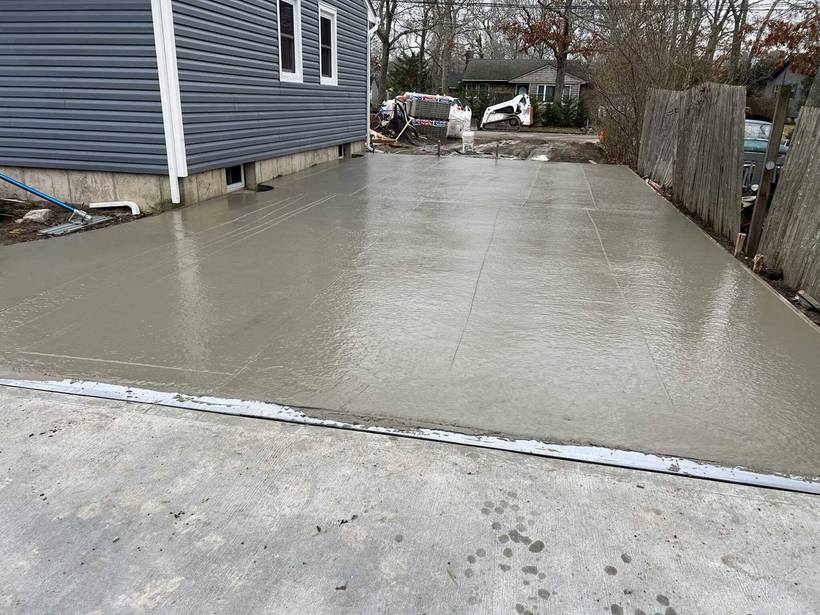
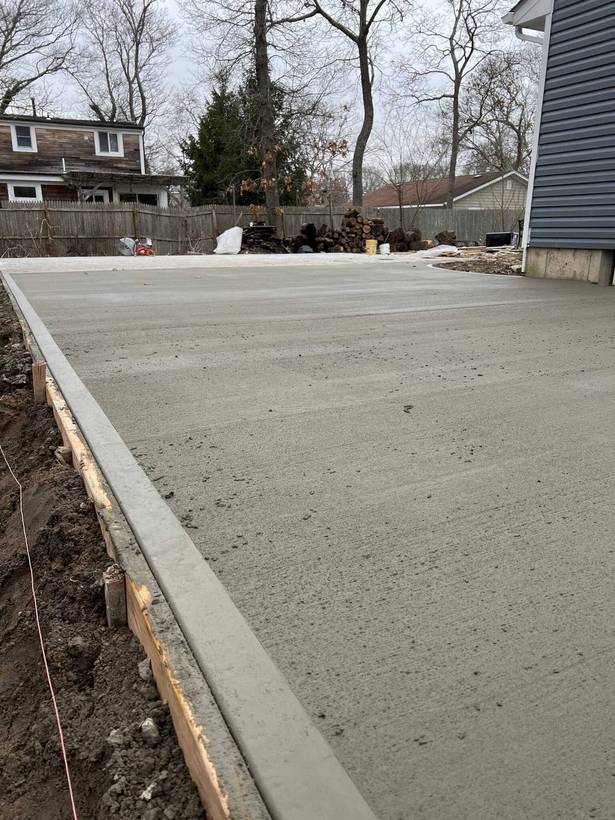
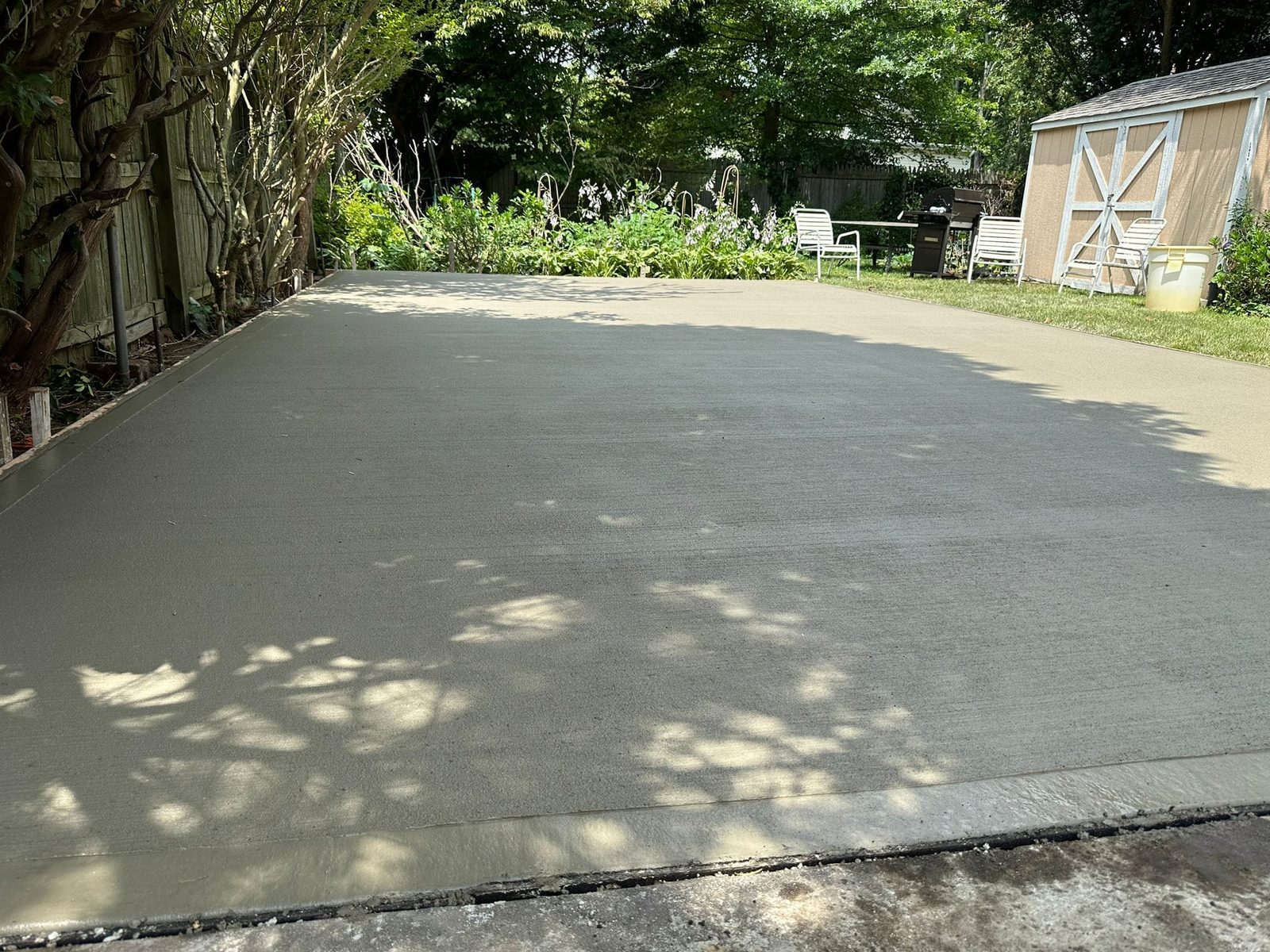
A concrete pad is one continuous slab poured on a compacted stone base, with control joints cut so cracking happens where we want it. For a parking pad we reinforce it and give it a thicker edge where tires roll on and off.
Concrete is easy to shovel and plow, and it reads as a clean extension of the driveway. The tradeoff is that if the base under it settles, the slab cracks or tips, and the fix is cutting out a section and repouring. If you are pouring this late in the season, see our notes on cold-weather concrete pours in Suffolk so you know what a late pour needs.
Pavers
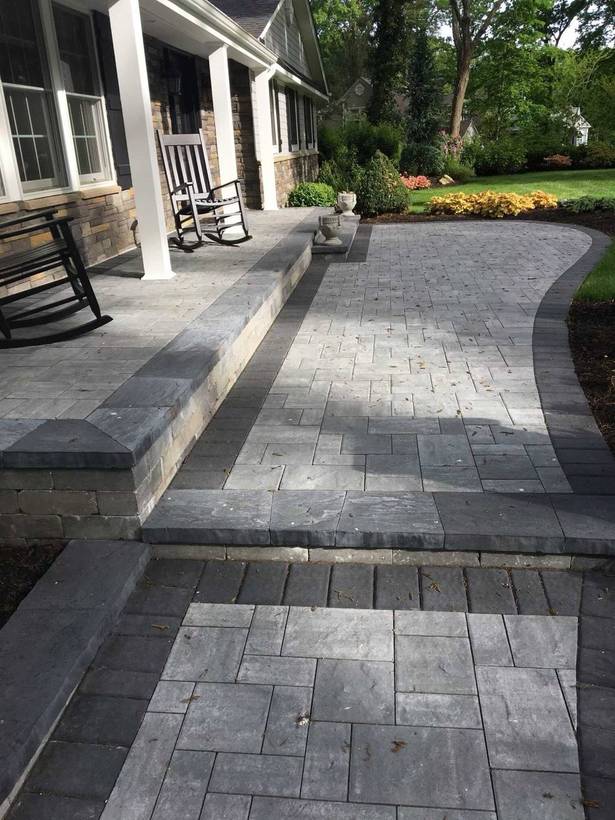
A paver pad is hundreds of individual units set on a compacted base with sand in the joints and a restraint along the edge. Pavers can be lifted and reset if a spot settles, which is useful next to a house where utility trenches sometimes run.
Pavers also give you the option of a permeable system, where the joints and base are built to let water pass through into the ground instead of running off. On a tight side yard with nowhere to send water, that can be the difference between a pad that works and one that floods the neighbor.
The tradeoffs are a higher chance of weeds in the joints if the joint sand is not maintained, and a surface a plow blade can catch if units heave. A snow blower or shovel is kinder to pavers than a steel plow edge.
Which one we lean toward
On a Selden ranch with a standard side yard, good soil and room to pitch water toward the back, a reinforced concrete pad is the simple answer. On a narrow lot, a lot with heavy clay or a lot where the only direction water can go is toward the neighbor, permeable pavers earn their keep.
Drainage toward the neighbor is the real risk
A side pad sits closer to the property line than any other slab on the house. Water that used to soak into grass now runs off a hard surface, and the easy slope is often toward the fence.
That is the one thing you cannot do. Sending runoff onto a neighbor's property is a problem whether or not anyone complains this year. Here is how we handle it.
Pitch away from the house, but control where it lands
The pad has to slope away from the foundation. The question is where that slope ends. On a lot with a few feet of grass between the pad and the fence, we pitch gently toward that strip and let it soak in. On a lot where the pad reaches nearly to the line, we pitch the long way, toward the backyard, and sometimes add a trench drain or a small catch basin at the low end.
Think about the downspout
Many ranches have a downspout right at the side of the house where the pad is going. If that leader dumps onto the new pad, you have doubled the water on the surface. We extend the leader under or past the pad so roof water does not become pad water.
Dry wells and Suffolk drainage
Suffolk County and the Town have rules about managing stormwater on site, and new paving sometimes triggers a drainage requirement. Whether your pad needs a dry well depends on the size and the Town's review. Ask the Building Division when you ask about setbacks. It is better to know before the forms are set than after.
How the job goes
A typical side pad takes a few days from layout to a usable surface, longer if an apron widening is part of it.
We start with layout off the survey, then excavate to the depth the base needs. Sod and topsoil come out. The base is compacted stone, placed in lifts and compacted each time. Soft spots get dug out and replaced, because a car parked in one place every night finds every soft spot.
For concrete, we set forms, place reinforcement, pour, finish and cut joints. The pad needs several days before a car should sit on it. For pavers, we screed a bedding layer, set the units, install edge restraint, fill the joints and compact.
Either way, the connection to the existing driveway gets attention. A new slab against an old one needs an expansion joint, and a paver pad against concrete needs a solid edge restraint so the units do not creep.
Questions to ask any contractor
Ask how thick the base will be and how it will be compacted. Ask where the water goes, and make them point at the spot. Ask whether the apron is changing and who is pulling the permit for it. Ask what happens at the joint with the existing driveway.
A contractor who has built pads in Selden should be able to answer all of that standing in your side yard.
Ready to get a third car off the lawn?
JDG Concrete & Construction is based in Centereach, a few minutes from Selden, and we hold Suffolk County Home Improvement License #HI-68303. We will measure the side yard, read the survey with you and tell you honestly whether concrete or pavers makes sense for your lot. Call or text (631) 672-1618 or request a quote.
Frequently asked questions
Do I need a permit for a side parking pad in Selden?
Selden is in the Town of Brookhaven, and rules on paved area, side-yard setbacks and new curb cuts vary by lot and zoning. Check with the Town of Brookhaven Building Division before you commit to a layout. If the pad touches the street with a new apron, the Highway Department may also be involved.
Is a concrete pad or a paver pad better for parking a car?
Both work if the base is built right. Concrete is one continuous slab with control joints and is simple to plow and shovel. Pavers are individual units on a compacted base, so they can be lifted and relaid if something settles, and they can be set as a permeable surface that lets water through.
How wide does a side parking pad need to be?
A single car needs enough width to open the door without stepping onto grass or scraping the house, and enough length to clear the front of the house if you want to walk past. The real limit is usually the side-yard setback, which is why we measure the lot before we talk about the pad.
Where does the rain go from a side pad?
It has to go somewhere on your property, not onto your neighbor's. A side pad sits close to the property line, so we pitch the surface toward your own yard or a drainage point, and on tight lots we look at a permeable paver surface or a drain so the water does not become a dispute next door.