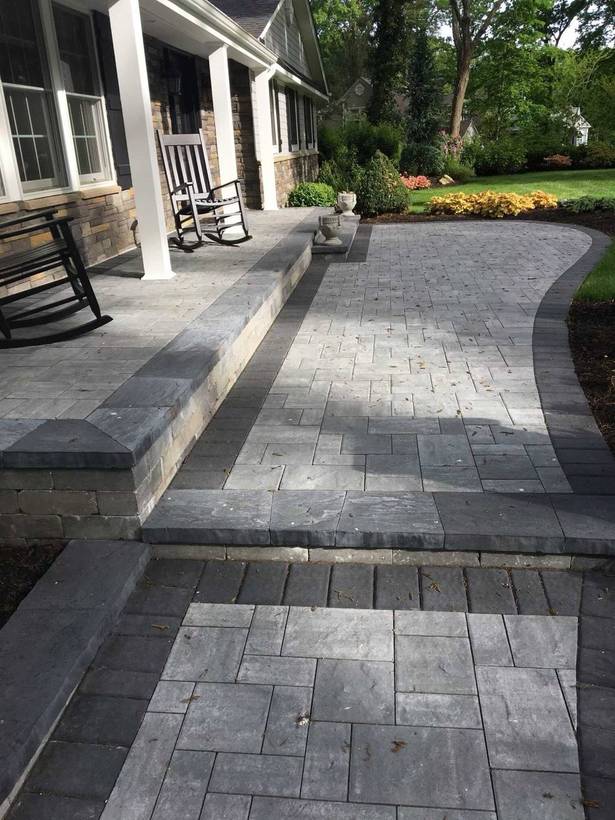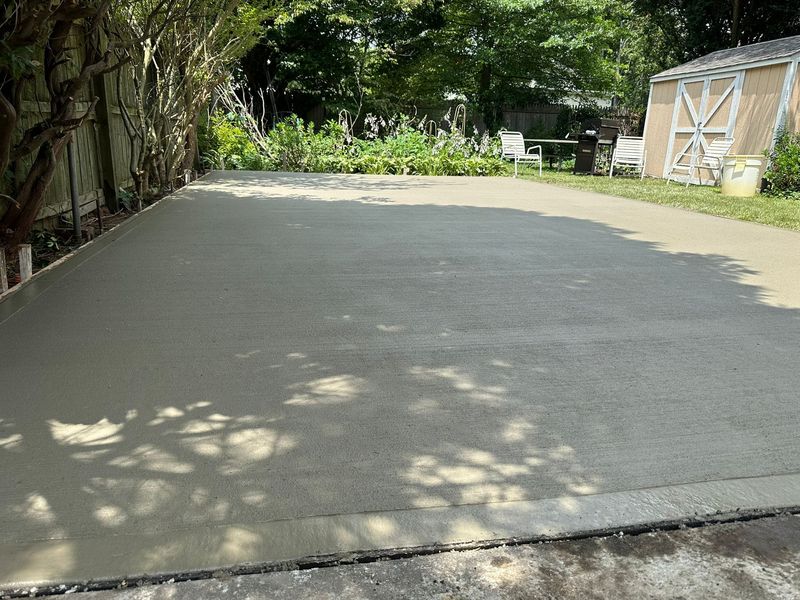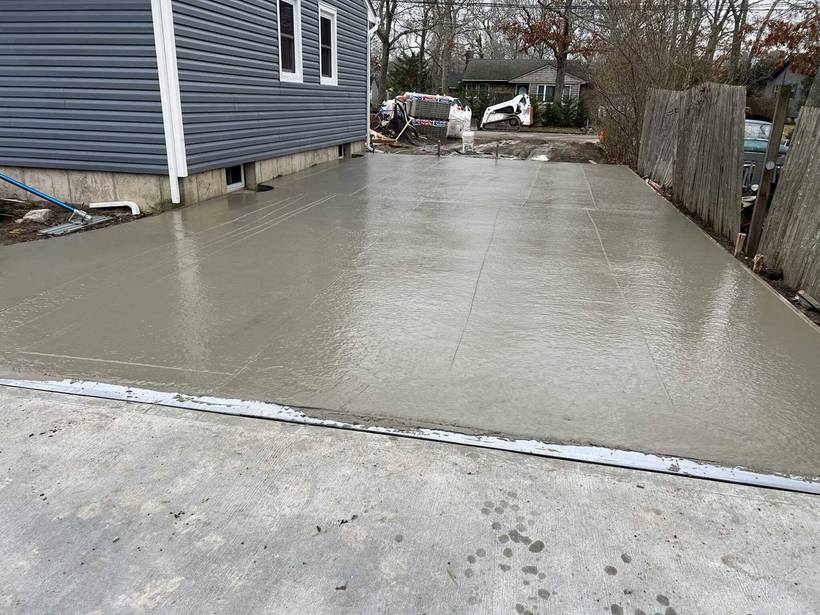
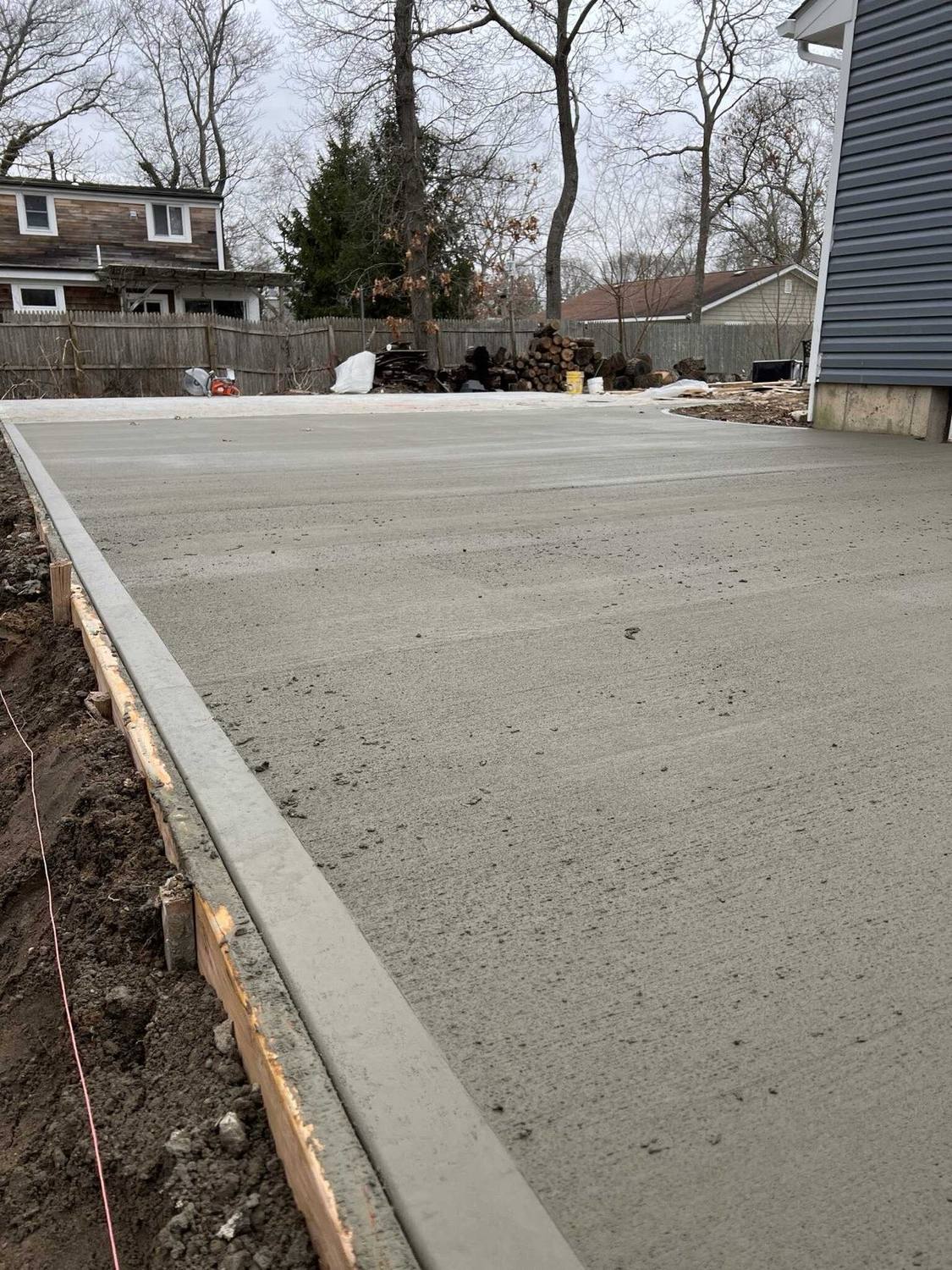
Every fall the same question comes up: the driveway, patio or slab is approved, the yard is ready, and the calendar says November. Pour now, or wait for April?
Concrete can be placed successfully in cold weather. Commercial jobs do it all winter. But a cold-weather pour is a different job from a June pour, and it only works when the protection is planned ahead of time. This post explains what the standards say, so you can ask the right questions before a concrete driveway or slab goes in late in the season.
What counts as cold weather
The American Concrete Institute's guide on this subject is ACI 306R. The current edition (306R-16) defines it simply. According to the ACI 306R-16 preview, cold-weather concreting conditions exist "when the air temperature has fallen to, or is expected to fall below, 40°F (4°C) during the protection period." The protection period is the time needed to keep the concrete from being damaged by cold while it gains strength.
Notice what that means. It is not about the temperature at 10 a.m. when the truck shows up. It is about the overnight lows over the next several days. A sunny 52-degree November afternoon can still be a cold-weather pour if the forecast drops into the 30s that night.
Older references, including NRMCA's cold weather concreting sheet (CIP 27), still quote an earlier definition based on average daily temperatures over three consecutive days. Some local specs use that version. Either way, a Suffolk County November usually qualifies.
What cold does to fresh concrete
Two different things happen when concrete gets cold.
It slows down
Cement and water react to form the hardened paste, and that reaction slows as temperature drops. NRMCA's rule of thumb is that a 20°F drop in concrete temperature roughly doubles the setting time. Slower setting means finishers wait longer, joints get cut later, and the slab stays vulnerable longer.
It can freeze
NRMCA says fresh concrete freezes if its temperature falls below about 25°F, and that the potential strength of concrete frozen early can be cut by more than half. The concrete also won't be durable. The key threshold is 500 psi of compressive strength. Concrete should be protected from freezing until it reaches that point, which NRMCA puts at about two days after placement for typical mixes.
For exterior flatwork like driveways and patios, there is a second, higher bar. NRMCA says newly placed concrete that will be exposed to water and freeze-thaw cycles should be protected from those cycles until it reaches at least 3500 psi.
What a cold-weather pour needs
If you are leaning toward pouring now, these are the measures the industry guidance describes. Ask your contractor which ones they plan to use and why.
Before the truck arrives
- A thawed, clean base. NRMCA says snow and ice should be removed and surfaces that touch the concrete should be above freezing. That may mean covering or heating the subgrade ahead of time. Pouring on frozen ground is a common mistake that leads to settlement once the ground thaws.
- A mix designed for the weather. The ready-mix supplier can deliver concrete at a controlled temperature. NRMCA lists a placement temperature of 55°F for sections under 12 inches thick, which covers most residential slabs.
- Air entrainment. Exterior concrete exposed to freezing and thawing should be air-entrained. This is standard for Long Island flatwork, but it is worth confirming on the order.
Admixtures, and their limits
Accelerating admixtures speed up setting and early strength. NRMCA notes that calcium chloride is effective but should not exceed 2% by weight of cement, and that non-chloride accelerators should be used where corrosion of steel reinforcement is a concern. Using more cement or a high-early-strength cement can also help.
The important line in the NRMCA guidance: accelerators do not prevent concrete from freezing, and they don't replace curing and protection.
After finishing
- Blankets or enclosures. Insulated blankets, tarps, or straw covered with plastic are common. Enclosures with heaters are used in colder conditions. NRMCA notes that corners and edges lose heat fastest, and that fuel-burning heaters in enclosed spaces must be vented, both for safety and to avoid surface dusting.
- The right curing method. Water curing is not recommended when freezing temperatures are close. NRMCA recommends curing compounds or plastic sheets instead. Its curing guide (CIP 11) says curing typically continues for 3 to 7 days and that placed concrete should be kept above 50°F.
- Gradual removal. Pulling blankets off on a cold morning can shock the surface. NRMCA advises removing protection gradually and warns that thermal cracking can occur when surface and core temperatures differ by more than about 35°F.
Pour now or wait: a homeowner's decision list
Instead of a yes or no, work through these questions.
- What does the 7-day forecast say? Look at the overnight lows, not the daytime highs. Several nights in the 20s right after the pour is a much harder job than a week in the low 40s.
- Is the base ready and unfrozen? If the excavation has been open through freezing nights, it may need thawing or rework.
- What protection is included? Ask specifically about blankets, how long they stay on, and who checks them.
- What happens if a cold snap arrives? A good plan includes a call to reschedule if the forecast changes.
- How soon do you need it? A slab under a new shed or addition may need to go in on schedule. A front walk usually doesn't.
- Can it survive the first winter? A slab poured in late November goes into its first freeze-thaw season young and wet. NRMCA's scaling guide (CIP 2) specifically advises caution about placing exterior concrete in late fall when it will freeze while still saturated, and it recommends avoiding deicers on new concrete.
If the answers point to waiting, spring is not lost time. Permits, layout and material choices can all be settled over the winter, so the job is ready to go when the ground thaws.
Related reading
If you pour this fall, read your new concrete driveway's first winter for salt and sealer guidance. For bigger projects like additions and garages, why a remodel starts below grade covers what happens before any slab is placed.
Weighing a late-season pour against a spring start? Call JDG Concrete & Construction in Centereach at (631) 672-1618 or request a quote, and we will look at your site, your schedule and the forecast together.
Frequently asked questions
What temperature is too cold to pour concrete?
There is no single cutoff. ACI 306R-16 says cold-weather conditions exist when the air temperature has fallen to, or is expected to fall below, 40 degrees F during the protection period. Below that, concrete can still be placed, but it needs planned protection.
How long does fresh concrete need protection from freezing?
NRMCA says concrete should be protected from freezing until it reaches a compressive strength of 500 psi, which is about two days after placement for typical mixes. Exterior concrete exposed to freeze-thaw cycles needs protection until it reaches at least 3500 psi.
Do accelerators make it safe to pour in freezing weather?
No. NRMCA states that accelerating admixtures do not prevent concrete from freezing. They speed up setting and strength gain, but blankets, curing and protection are still required.
Can concrete be poured on frozen ground?
Industry guidance says snow and ice should be removed and surfaces in contact with the concrete should be above freezing before placement. That can mean thawing or insulating the subgrade first, so frozen ground is a reason to delay.
Is it better to wait until spring?
It depends on the forecast, the project and how soon you need it. A slab placed right before hard freezes also goes into winter saturated, which NRMCA flags as a scaling risk. Talk through the timing with your contractor before you commit.