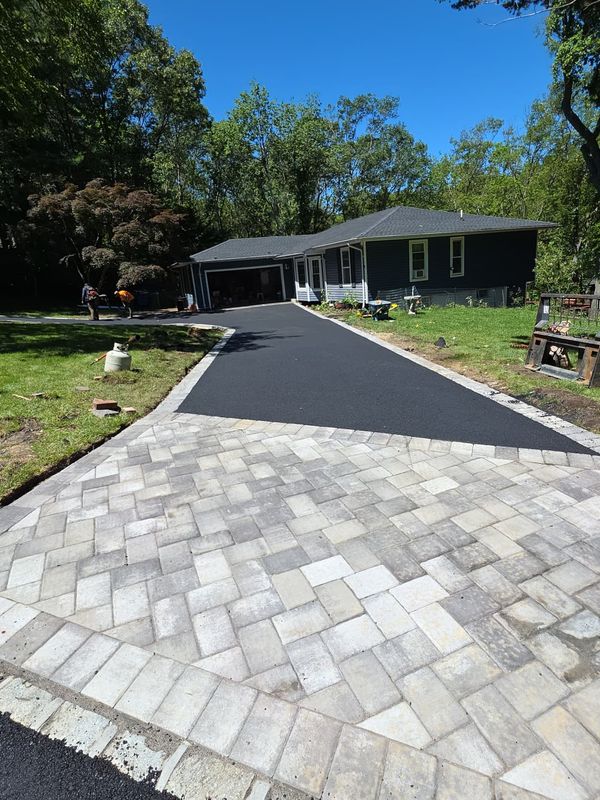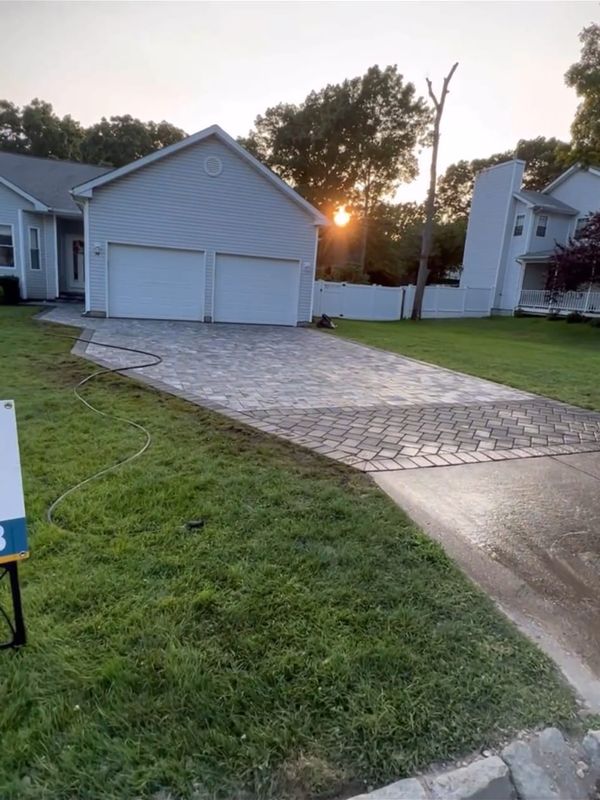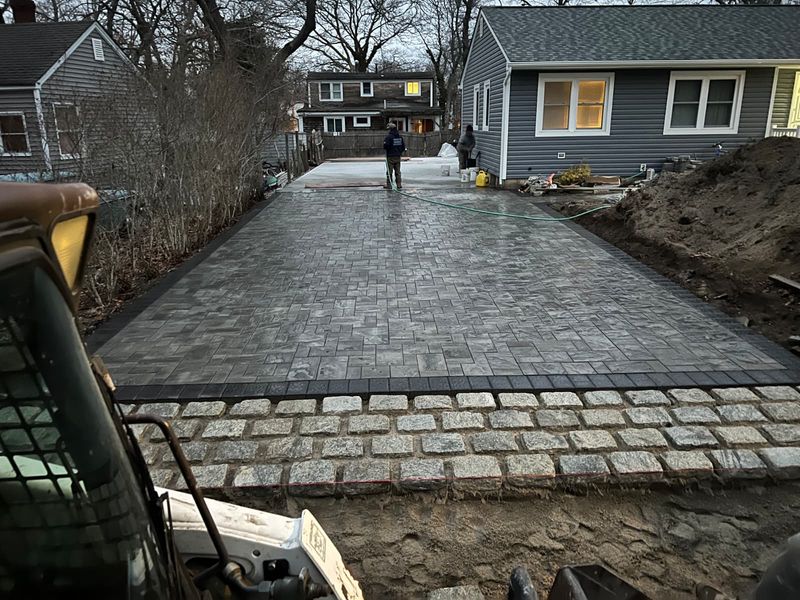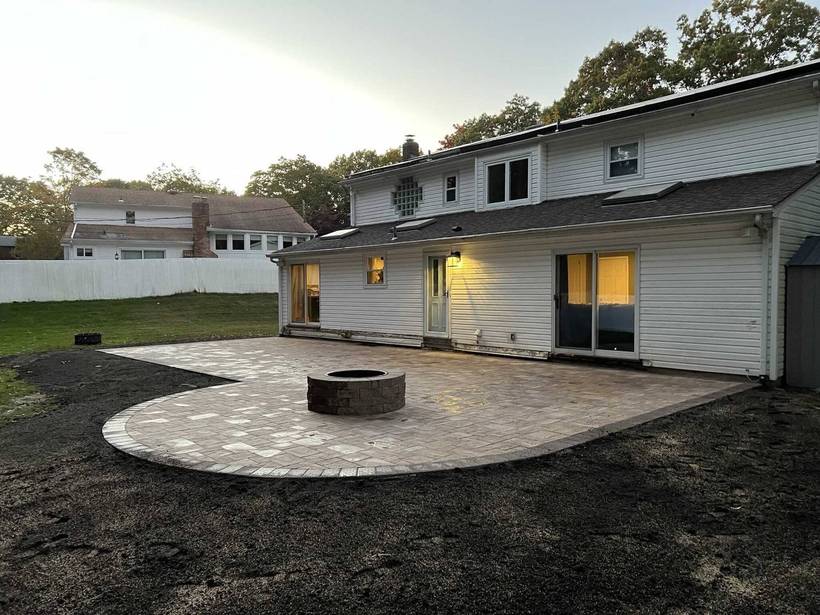
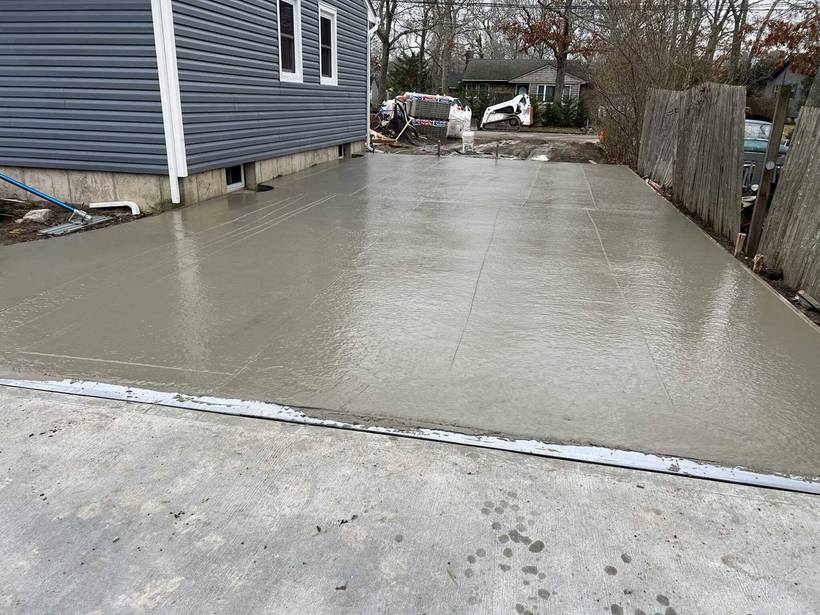
A concrete driveway is the largest slab most Long Island homeowners own, and when it fails the cause is almost always the base beneath it. JDG Concrete tears out the old surface, corrects the subgrade and builds a compacted stone base before pouring, so driveways in Centereach and Selden stay flat through freeze and thaw.
What is included
- Tear-out and haul-away
- Subgrade cut and compacted base
- Forms set for height and pitch
- Reinforcement where the slab carries weight
- Pour, float and broom finish
- Control joints cut in planned lines
- Cure time explained before you drive
Why it lasts
Long Island soil drains well but shifts when it is not confined and compacted. A slab poured on loose fill settles under the first winter's freeze, no matter how good the finish looks.
Every driveway is pitched to carry water away from the foundation, and joints are cut where we want the concrete to move. Water control and a proper base are what keep it level.
Questions homeowners ask
Can you pour new concrete over my old driveway?
We do not recommend it. Pouring over a failing slab copies its cracks and settlement into the new surface. We remove the old driveway, correct the base and pour fresh so the new slab is supported evenly.
Why does concrete crack even when it is done right?
Concrete shrinks as it cures and moves with temperature. Control joints are cut so that movement happens in straight, planned lines rather than random cracks across the slab.
Do you also do concrete walkways and side-of-house slabs?
Yes. Walkways, aprons, pads and side-of-house slabs follow the same tear-out, base, form and finish process as a driveway.