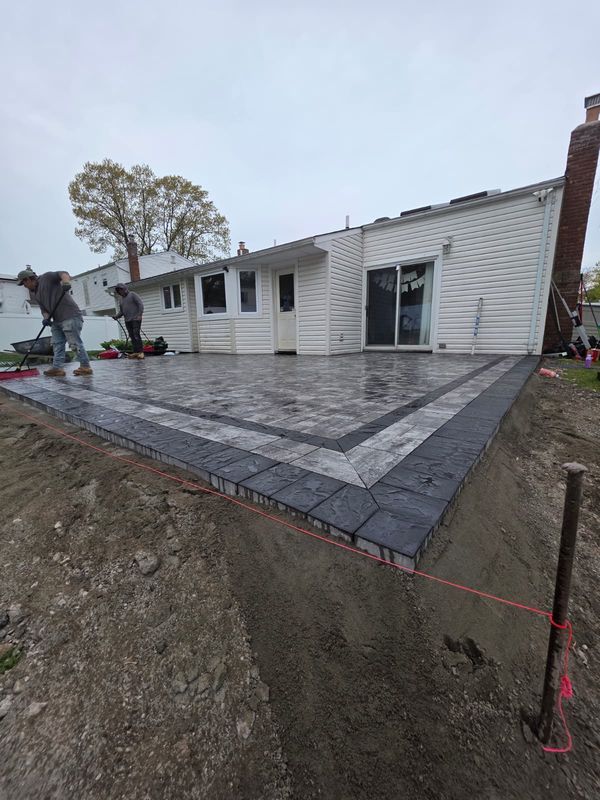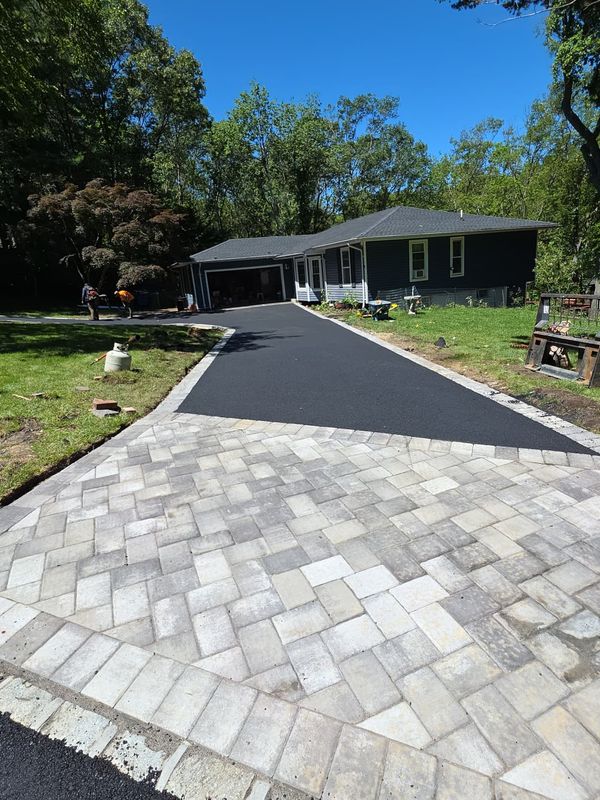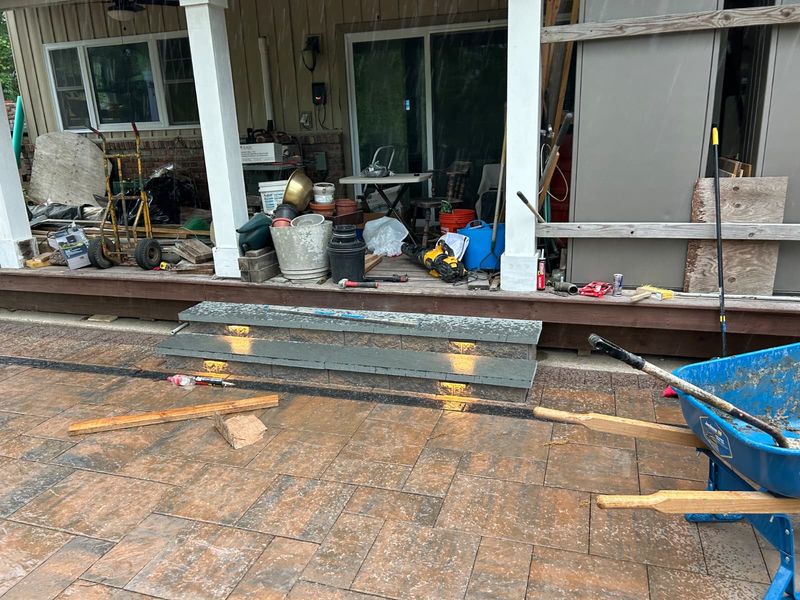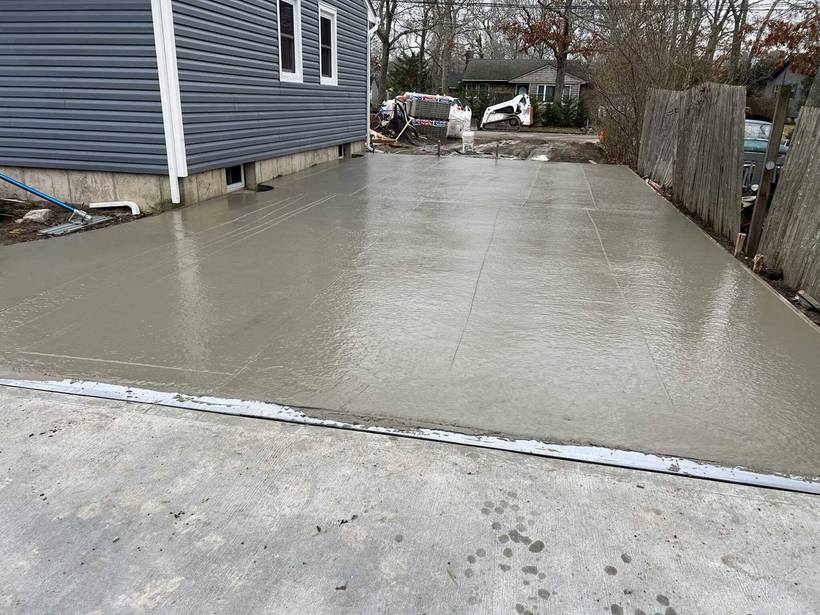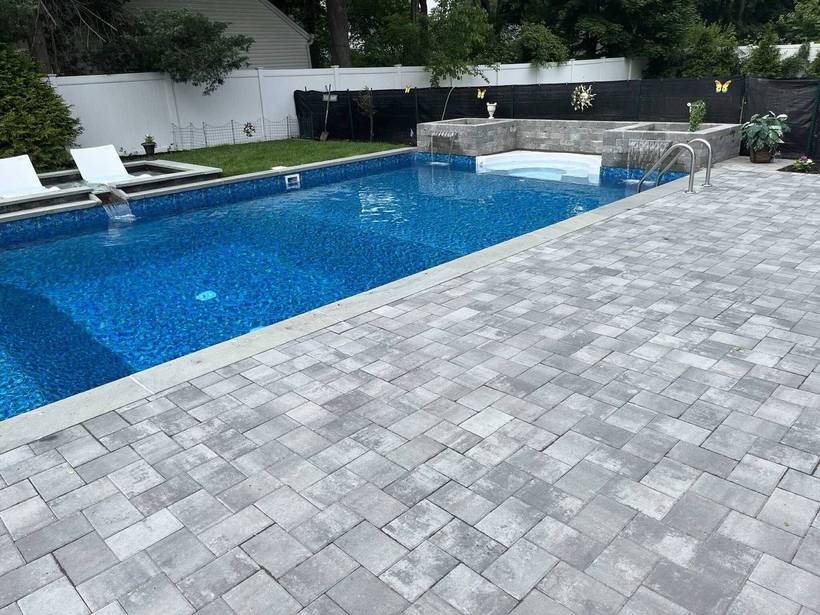
Paver patios and driveways are only as good as the base beneath them. The pattern is what people notice; excavation, compaction and edge restraint decide whether the stones stay flat. JDG builds paver patios, walkways and driveways across Centereach and Long Island from the ground up, the same way we approach every concrete job.
What is included
- Paver driveways with deeper base
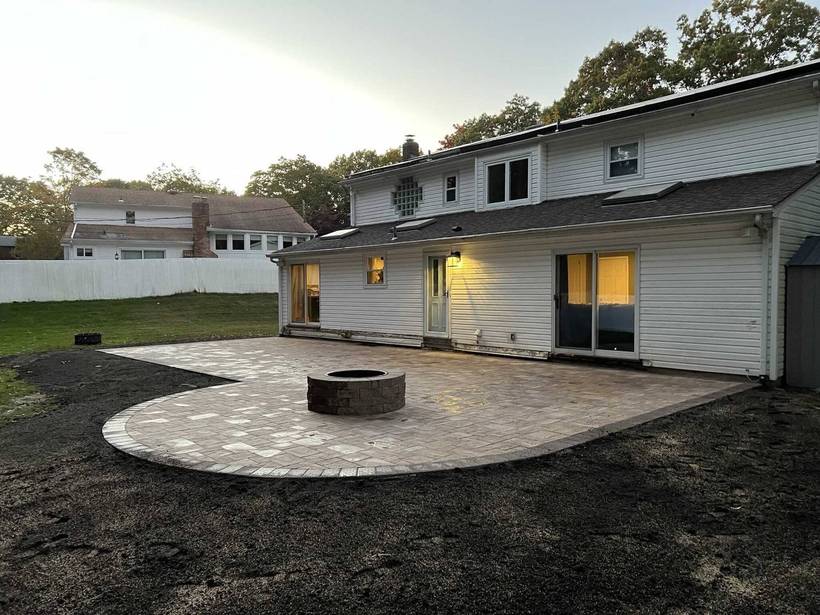
- Backyard patios shaped to the yard
- Walkways and front entries
- Fire pits and seating walls built in
- Cobble aprons and borders
- Polymeric sand in the joints
- Edge restraint around the field
Why it lasts
Sandy Long Island soil drains well but shifts unless it is confined and compacted. We excavate to the right depth and build the base in layers, compacting each one before the next.
Every patio is pitched so water runs away from the house, and borders lock the field in place. Freeze and thaw push on anything holding water, so drainage comes first on every job.
Questions homeowners ask
Why do some paver patios sink or ripple?
Almost always because of the base: not enough excavation, poor compaction, no edge restraint or water collecting underneath. We build the base in compacted layers and pitch the surface so water runs off.
Can you add a fire pit or seating wall to a patio?
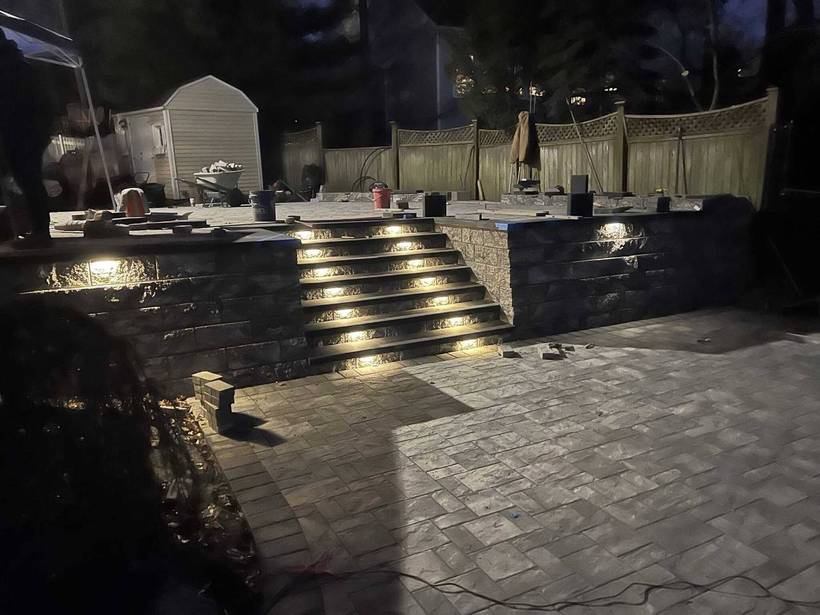
Yes. Fire pits, seating walls, steps between levels and low-voltage lighting are commonly built as part of the same patio project.
Can a paver driveway handle cars and plows?
Yes, when it is built for it. A driveway gets a deeper base than a patio, plus borders that lock the field in place.