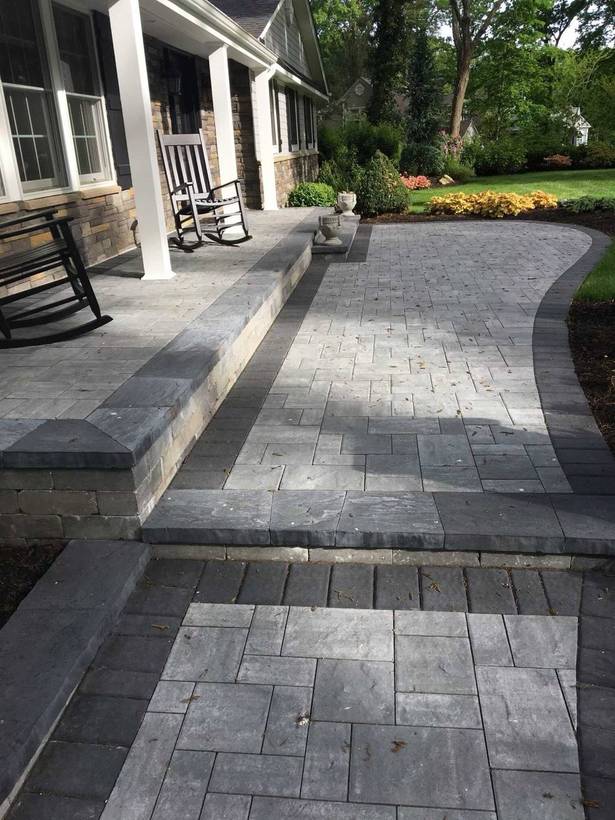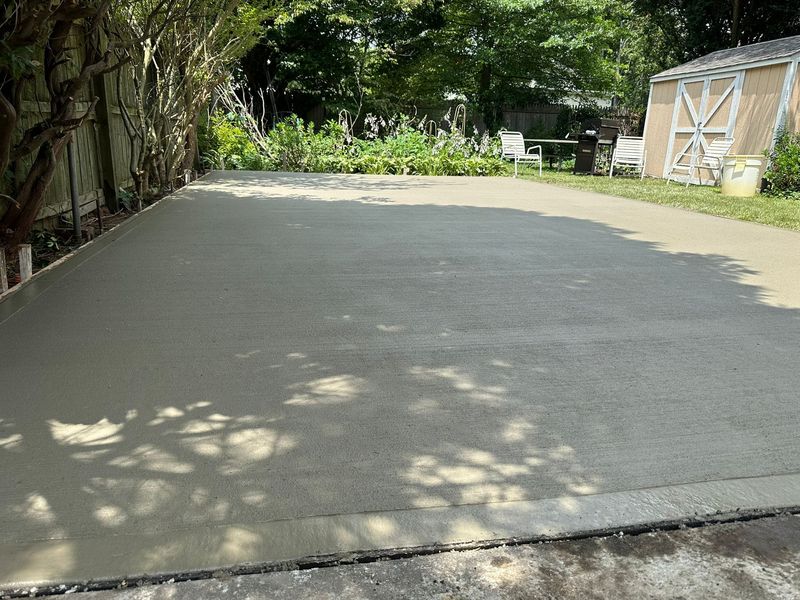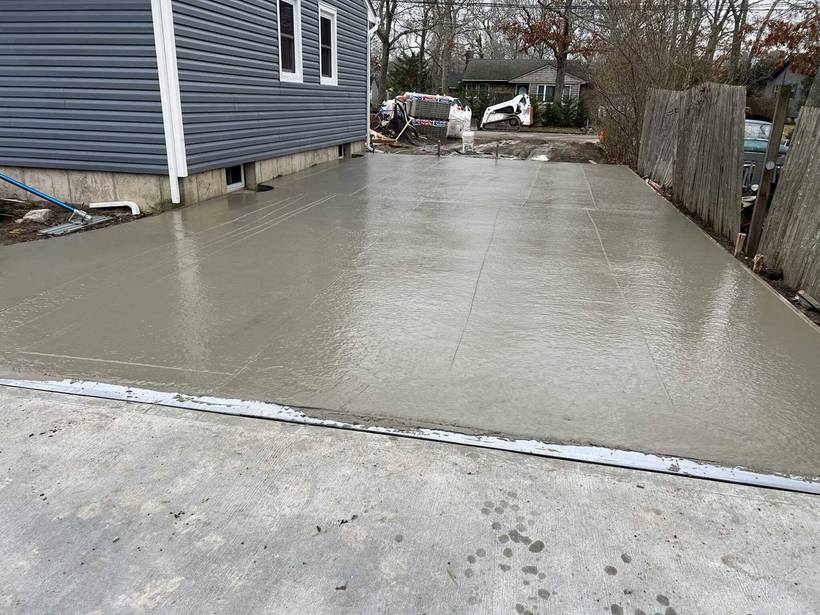
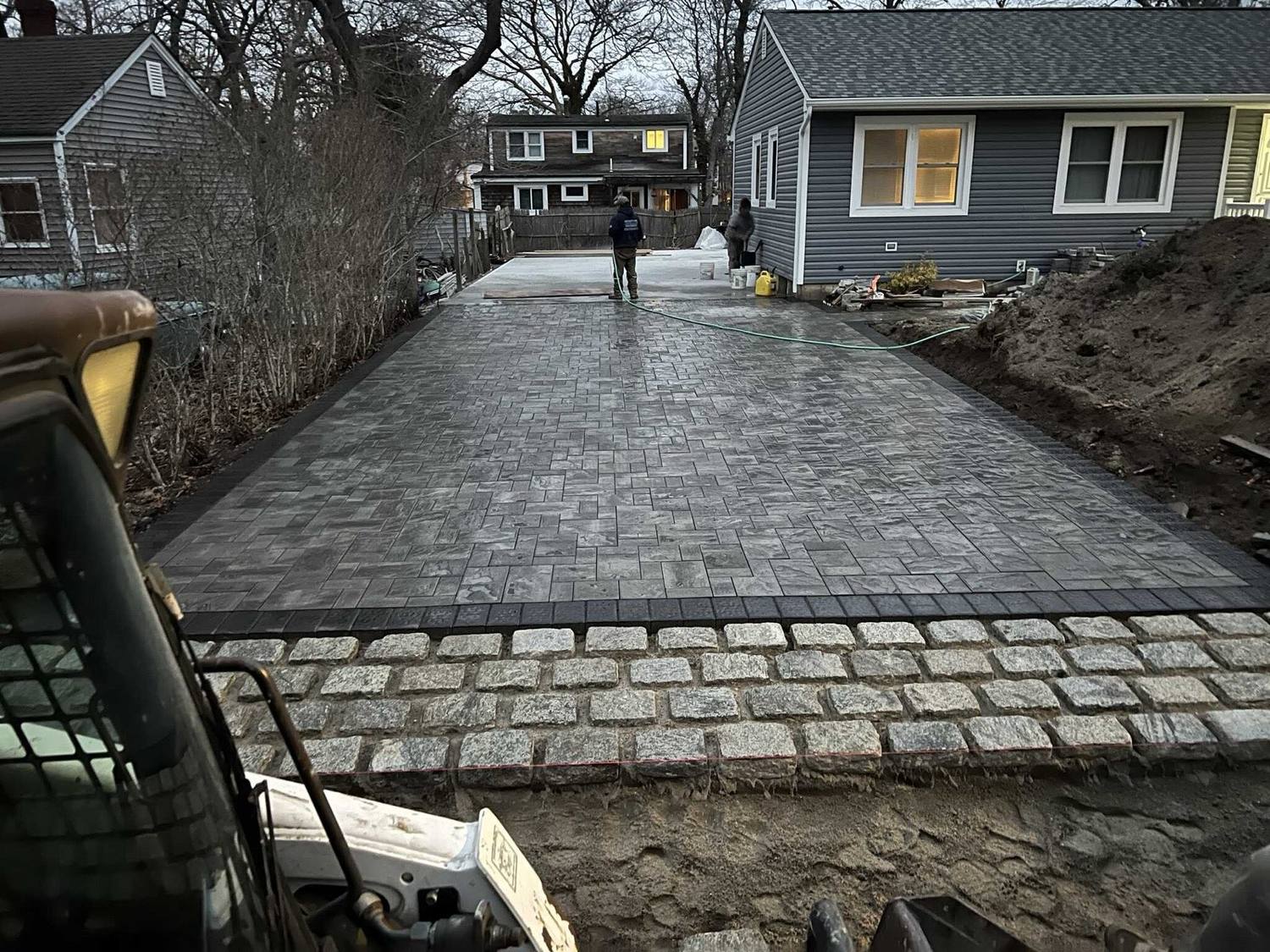
The apron is the least glamorous part of a driveway. It is the short stretch between the street and where your driveway really begins, and it takes the most abuse: plow blades, heavy trucks turning in, water running off the road. It is also the part with the most paperwork, because in most cases it doesn't sit on your property at all.
If you're planning a new concrete driveway in Centereach or anywhere else in the Town of Brookhaven, the apron is where a road agency gets involved. Here is how that works, based on what the Town and other agencies publish. Fees, timing and anything that isn't on their pages are questions for the office itself.
Who owns the strip at the end of your driveway
Your lot line usually stops short of the pavement. Between the property line and the road there is often a strip of public right-of-way. Sidewalks, curbs, utility poles and the apron typically live there.
Because that strip belongs to the road, the agency that owns the road controls work in it. In Centereach, that can be one of three agencies:
- The Town of Brookhaven Highway Department for Town roads, which covers most residential streets.
- Suffolk County DPW for county roads.
- The New York State DOT for state highways. Middle Country Road, the main east-west road through Centereach, is State Route 25.
Your survey, or a quick call to the Town, will tell you which kind of road you front. Get this right before anything else, because each agency has its own process.
The Town of Brookhaven Residential Highway Work Permit
For Town roads, the Brookhaven Highway Department issues a Residential Highway Work Permit. According to the Town's page, it covers two kinds of work by residential property owners in the Town right-of-way:
- Apron legalizations
- Road improvements
"Legalization" generally refers to getting approval for an apron that exists or is being built, so it meets the Town's requirements. If you're replacing, widening or adding an apron, ask the Highway Department how they classify your job before you schedule anything.
What the Town asks you to upload
The permit page lists documents required for all residential work permits:
- Proof of insurance
- Stamped plans or a survey
- A Planning Board approval letter
The application itself asks for the site address or Suffolk County Tax Map (SCTM) number, the applicant's name and mailing address, and a brief description of the work.
The Planning Board letter is the item homeowners are most surprised by. If you don't know whether your project has or needs one, ask the Highway Department what they will accept in your case.
Insurance
The Town requires liability insurance naming the Town of Brookhaven and the Superintendent of Highways as additional insureds, at amounts spelled out in the HW-11 Highway Work Permit application packet. If you're using a contractor's insurance, the Town says an original letter is required. Ask your contractor early, since getting a certificate with the correct additional insureds can take a few days.
Fees and bonding
The Town says fees vary based on the type of work and links a Highway Department fee schedule from the permit page. Bonding requirements are communicated during application review. We don't quote either one here. Check the current fee schedule or call the Highway Department.
Contact
The Highway Department's permit page lists 1 Independence Hill, Farmingville, and the phone number 631-451-8696, along with the Town's general 631-451-TOWN line. Applications can be filed online through the same page.
If you're on a county or state road
Suffolk County roads
Suffolk County DPW issues a Non-Utility Highway Work Permit for work that modifies access or frontage in the county right-of-way, including new or modified driveway access. The county's page notes that fees, insurance and workers' compensation requirements apply, and that a town or village building permit for certain projects can't be issued until the county signs off on a related notice. If your house is on a county road, coordinate with both offices.
State highways
NYSDOT issues residential driveway permits to homeowners who live on a state highway and need to install, alter or remove a driveway connection. If your driveway opens onto Middle Country Road, start there instead of the Town.
Why aprons get built differently
Even setting permits aside, the apron isn't just more driveway. A few things make it a separate piece of work:
- It meets the road. The joint where the apron meets the pavement or curb is a weak point. It should be planned as an isolation or construction joint, not left to crack where it wants. NRMCA's guide on joints in slabs on grade (CIP 6) explains how isolation joints let a slab move independently from adjoining construction.
- It handles road water. The apron has to fit the drainage pattern of the street so you don't create a puddle at the curb or send road runoff into your garage.
- It takes plows and trucks. Oil deliveries, dumpsters and plow blades all hit the apron first.
- The agency may set the specs. Thickness, material and shape may be dictated by the road owner, not by what matches your driveway. Ask what the Highway Department expects before choosing a finish.
A sensible order of operations
- Confirm who owns your road: Town, county or state.
- Pull your survey and check where the property line falls.
- Call the right agency and describe the work: replacing, widening or adding.
- Gather the documents, including insurance with the right additional insureds.
- Apply and wait for approval before breaking concrete in the right-of-way.
- Schedule inspections as the permit requires.
Doing it in this order avoids the worst outcome: a finished driveway with an apron the Town later says has to come out.
Related reading
Live in the Village of Lake Grove? Your rules are different. See who issues patio and driveway permits in Lake Grove. Once the new driveway is in, its first winter is the next thing to plan for. You can also see the towns we cover on our Centereach area page.
Planning a driveway with a new or wider apron? Call JDG Concrete & Construction at (631) 672-1618 or request a quote, and we will help you sort out which office your job runs through before the work is scheduled.
Frequently asked questions
What is a driveway apron?
It is the section of driveway between the street and your private property, usually crossing the curb line or road shoulder. In most cases it sits in the public right-of-way, not on your lot, which is why the road owner has a say in how it is built.
Does the Town of Brookhaven require a permit for apron work?
The Brookhaven Highway Department's Residential Highway Work Permit covers apron legalizations and road improvements by residential owners in the Town right-of-way. Call the Highway Department to confirm whether your specific job needs one before work starts.
What documents does the Brookhaven residential permit ask for?
The Town's permit page lists proof of insurance, stamped plans or a survey, and a Planning Board approval letter, plus the property address or Suffolk County Tax Map number and a description of the work. Bonding is assessed during review.
How much is the permit and how long does it take?
The Town says fees vary by type of work and publishes a Highway Department fee schedule. Processing time is not posted on the permit page, so ask the Highway Department directly.
My house is on Middle Country Road. Is it still a Town permit?
Probably not. Middle Country Road is State Route 25, and NYSDOT issues residential driveway permits to homeowners on state highways. County roads go through Suffolk County DPW. Confirm which agency owns your road first.