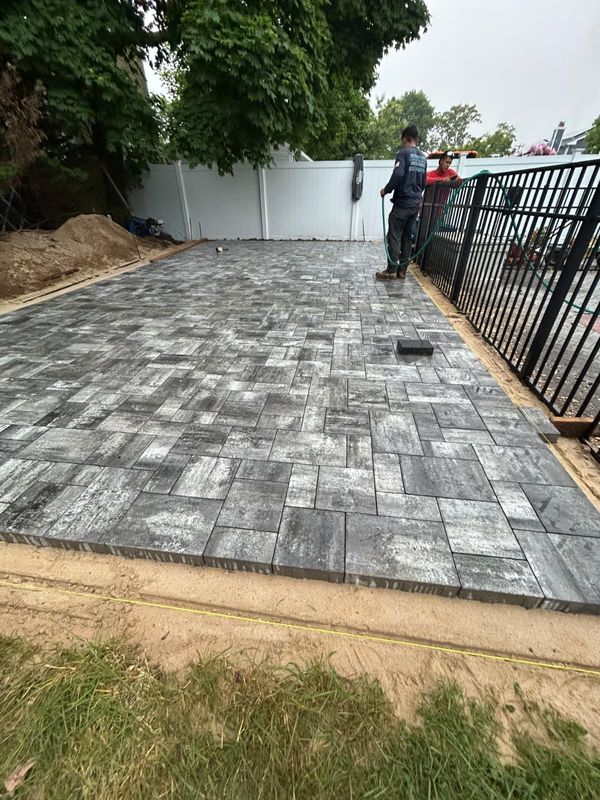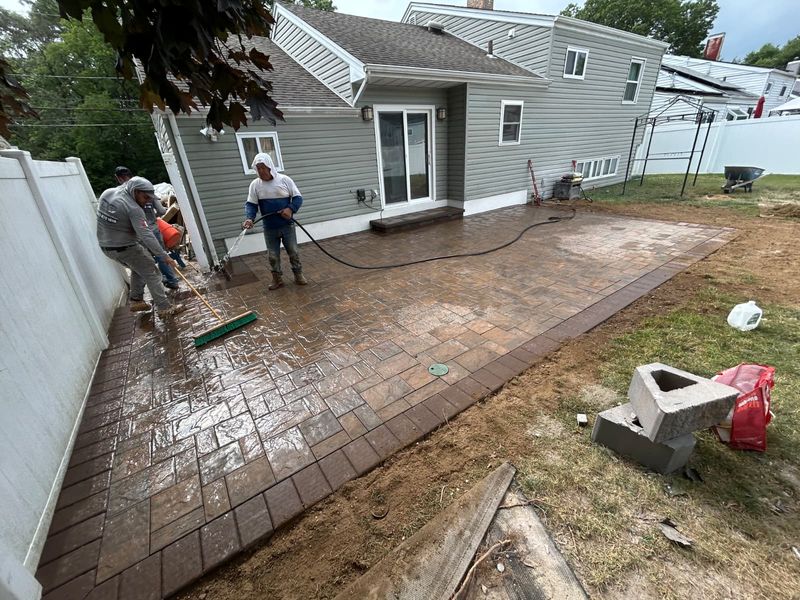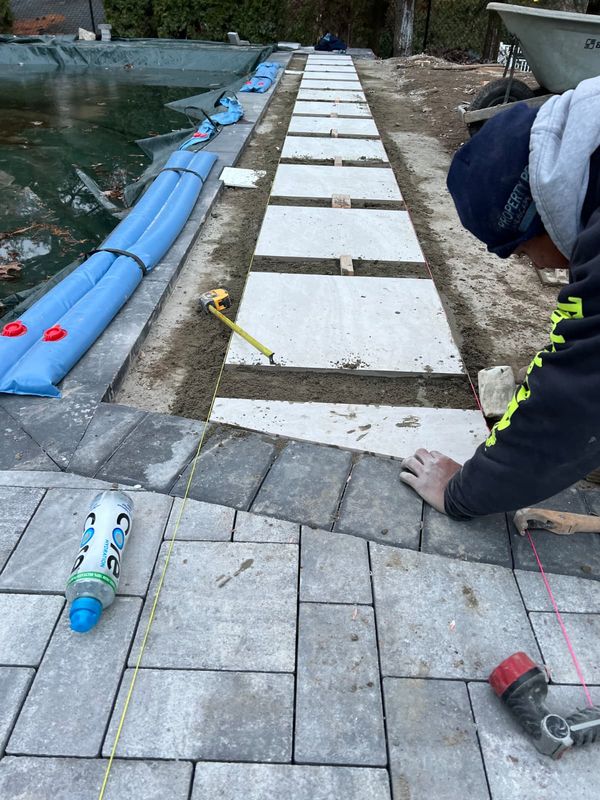
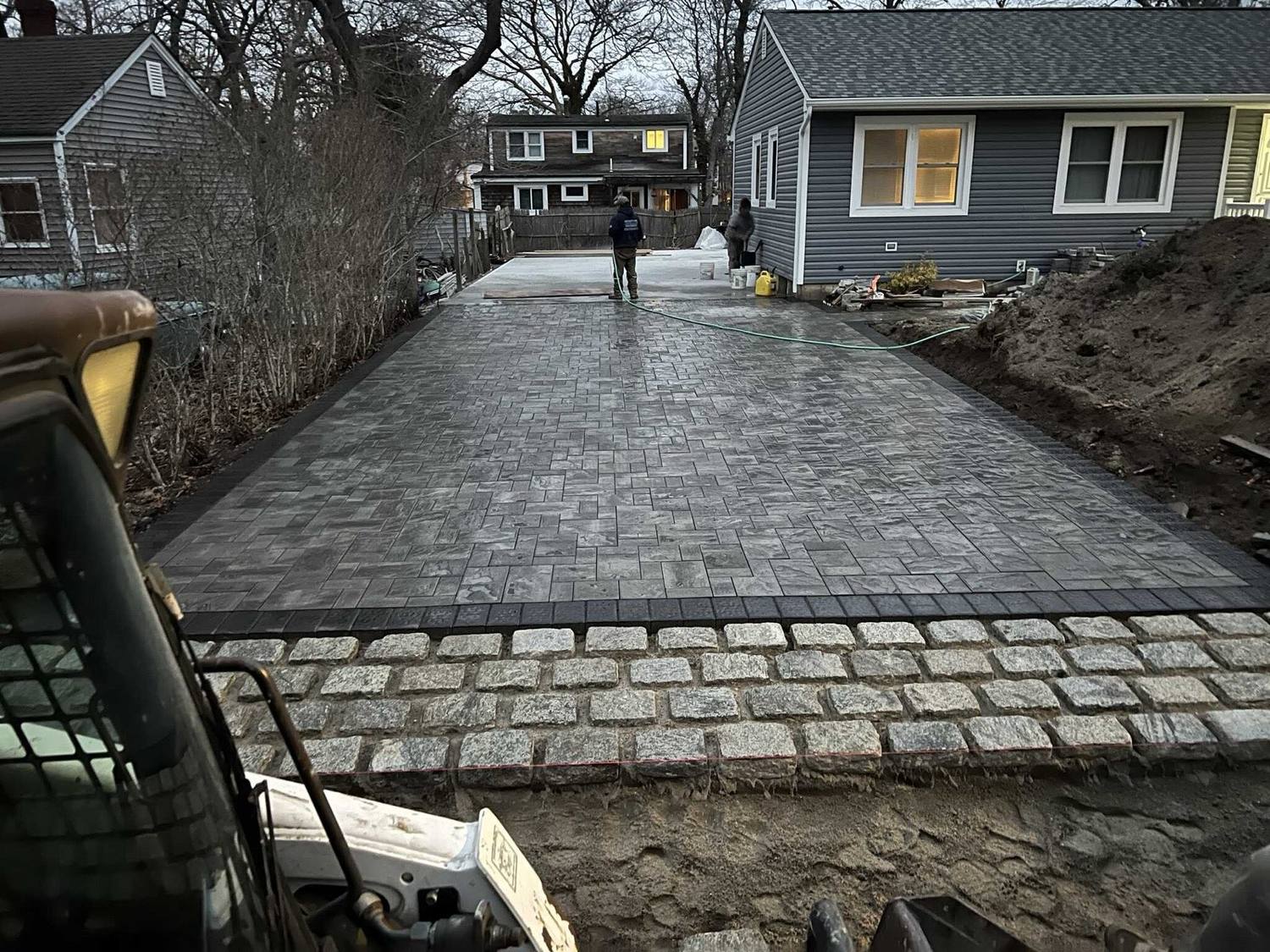
A paver driveway can handle plowing, but only if the blade rides slightly above the surface and the operator stays off the edges. Raised shoes, a poly or rubber cutting edge, and a quick walk-through before the first storm prevent most chipped corners and lost joint sand.
The first freeze is close, and the plow contractor you hired for the season may never have worked on pavers. A paver driveway is built to carry weight, but a steel blade dragged across it is a different kind of load. It catches edges, scrapes out joint sand and can tip a single paver loose.
Here is what to tell whoever plows your driveway, and what to check yourself before the snow comes. If you are in Centereach, Selden or Coram, this is the same advice whether the driveway is old or new.
Why do plows damage paver driveways?
Pavers are individual units locked together by joint sand and a restraint edge. Concrete is one slab. That difference matters in snow.
A steel blade that runs along the surface does three things:
- Catches a paver lip. Even a small height difference between neighbors gives the blade something to grab.
- Scrapes out joint sand. Once the sand is gone, the pavers can shift and water gets in.
- Pushes on the border. A blade that hits the edge course sideways can loosen the whole border.
Most of this damage comes from setup and habit, not bad luck.
What shoe height should a plow use on pavers?
Plow shoes are the skids on each side of the blade. They set how far the cutting edge floats above the ground. On asphalt, many operators run them low to scrape clean. On pavers, they should be raised so the cutting edge never touches the surface.
The tradeoff is simple. A higher blade leaves a thin layer of snow behind. A lower blade clears more but scrapes. On pavers, accept the thin layer. Sun, a little melt and a shovel handle the rest.
Ask the operator to set the shoes before the season, on your driveway, not on the way in. Exactly how high depends on their equipment and on how flat your surface is, so have them check it against your driveway instead of guessing.
Do poly edges help?
Yes, they usually do. A poly (polyurethane) or rubber cutting edge is softer than a steel one. It gives a little when it meets a slightly raised paver instead of digging in. Many plow contractors offer them, and some use them only on request.
A soft edge is not a free pass. It still wears the surface and still pulls sand if it is pressed down. Treat it as a second layer of protection on top of raised shoes, not a replacement.
What should you tell your plow contractor?
Keep it short and put it in writing, even a text. A good list:
- Shoes up, blade floating above the pavers.
- Poly or rubber cutting edge if they have one.
- Plow in straight passes along the driveway, not sideways into the border.
- Do not pile snow on the lawn edge where the border is, and do not push it into the street apron.
- No salt or ice melt unless you have approved it.
- Tell you if they hit something, so a small problem does not wait until spring.
Walk the driveway with them once. Point out the edges, any sunken spots and where the apron meets the street.
Tip: Take a few photos of the driveway before the first storm. If something gets chipped, you will know whether it was already there.
Where do paver driveways usually get hurt?
Look at these spots before and after the first plowing:
- The apron at the street. Plows often turn here, and the height change between road and driveway is where blades catch. Our post on Brookhaven driveway aprons covers who to check with before touching that area.
- Corners and curves. A blade cuts across a curve instead of following it.
- Border courses. If the border has no solid restraint behind it, side pressure moves it.
- Low spots. A paver that has settled even slightly becomes a catch point.
- Garage threshold. Operators sometimes push snow hard into the door.
If you see a paver standing proud or a border that wiggles, fix it before the ground freezes. Frozen ground makes resetting work harder.
What about joint sand and sealing?
Joint sand does the locking. If you can see bare gaps or the sand sits well below the paver edge, plowing will pull out whatever is left. Sweeping in fresh joint sand before winter is a small job that helps a lot.
Sealer is a separate question. It can help keep sand in place and make cleanup easier, but it is not a shield against a steel blade, and it can change how the surface behaves when icy. Ask us when you book if you are unsure whether it suits your pavers.
Is the base the real issue?
Often, yes. A driveway with a properly built base takes plow pressure and tire loads far better than one that was done thin. If you see pavers sinking in wheel paths or the border drifting, the problem is probably below the surface, not the plowing. Our post on paver driveway base depth for plows, oil trucks and dumpsters explains what to look for.
Also read your new driveway's first winter for the salt side of the story. It is written about concrete, but the salt advice carries over in part.
What if the damage is already done?
Chipped corners are cosmetic. Loose pavers, a moving border and large sunken areas are structural, and they get worse when water freezes in the gaps. Photograph it, keep the plow contractor in the loop, and have the driveway looked at once it is safe to do so.
The repair depends on what is underneath: sometimes it is resetting a few pavers and refilling joints, sometimes it is rebuilding a section down to the base. We quote after a site visit because we cannot tell from a photo.
If you want a paver driveway looked at before winter, or a plan for the border and apron, contact us for a quote. Tell us the town and what you are seeing, and we will set up a site visit.
Frequently asked questions
Can you plow a paver driveway?
Yes, as long as the blade is kept slightly above the surface with raised shoes and ideally a poly or rubber edge. Keep passes straight and away from the border.
Should I tell my plow guy before the first snow?
Yes. Give your instructions in writing and walk the driveway with them once so they know where the edges, curves and apron are.
Will a poly edge stop all plow damage?
No. It is gentler than steel but can still scrape sand and wear the surface if pressed down. Raised shoes matter just as much.
Is it okay to use salt on pavers?
Check with the installer or ask us when you book. Many people avoid heavy salt use on pavers, and it is worth deciding before the season starts.
When should I fix loose pavers?
Before the ground freezes if possible. Water that gets into gaps and freezes will make a small problem larger.