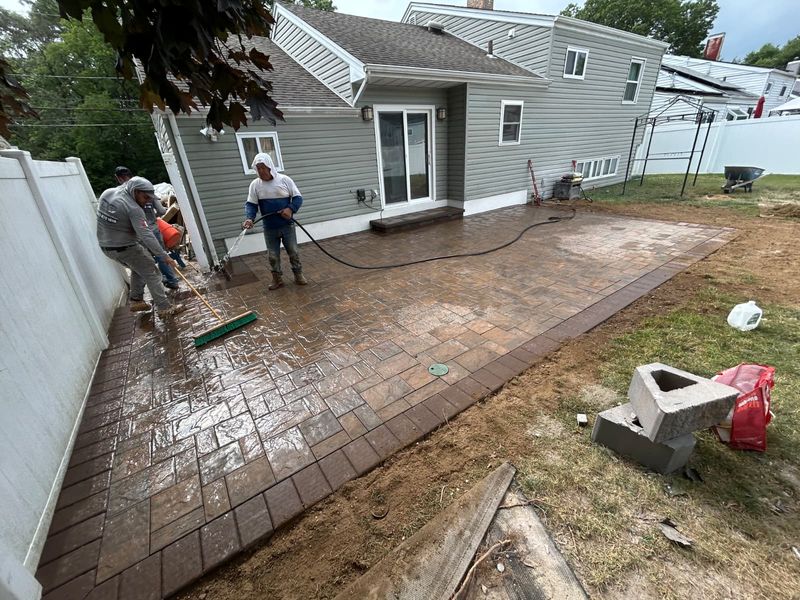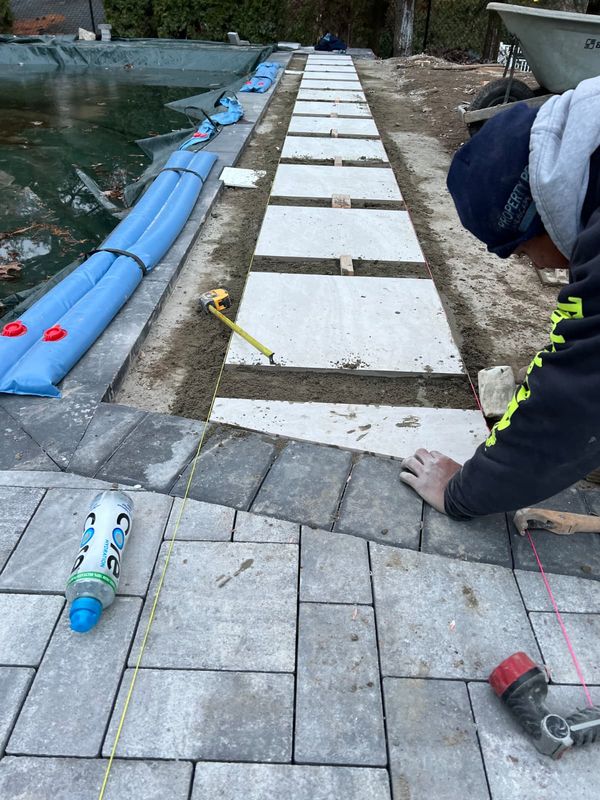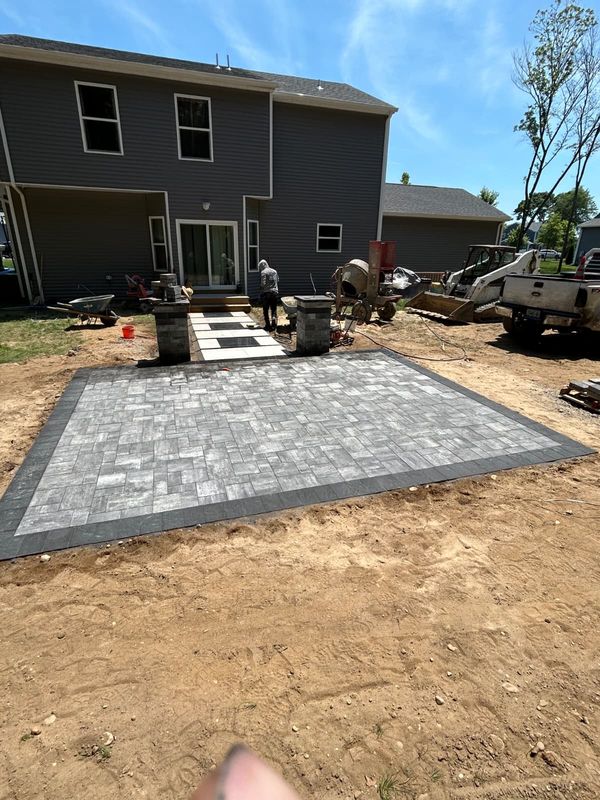
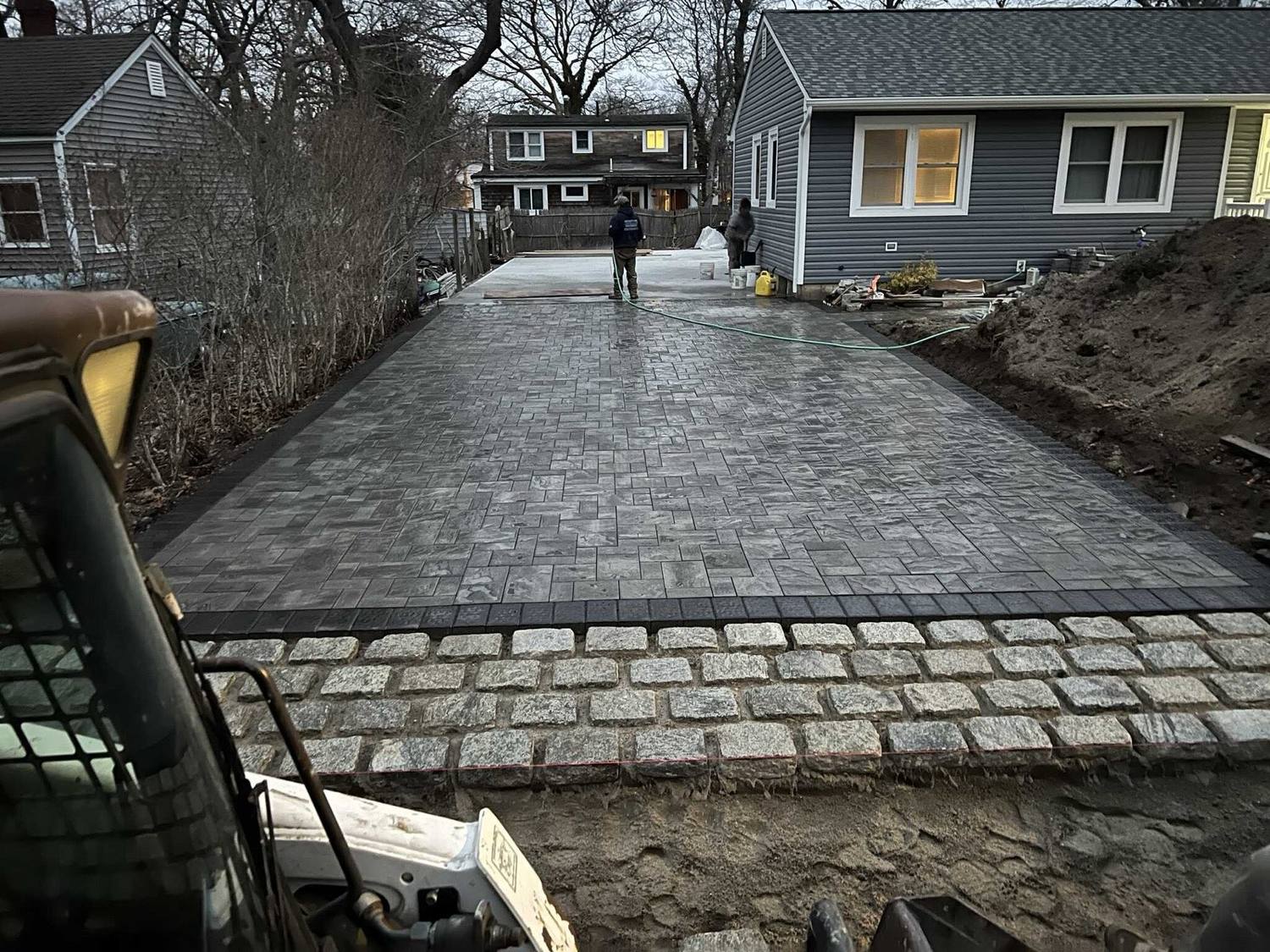
Two paver driveway bids can look identical on paper, use the same paver from the same catalog, and perform completely differently after three winters. The difference is almost never the paver. It is what sits under it, how much of it there is and how well it was compacted.
This post is for homeowners in Centereach, Selden, Lake Grove and the surrounding Brookhaven hamlets who are comparing bids for a paver driveway or patio and want to know what the numbers in each quote actually mean. It also covers the three heavy things that visit most Long Island driveways and quietly test the base: the plow, the oil truck and the construction dumpster.
Why a driveway is not a big patio
Pedestrian pavers carry people, furniture and a grill. A driveway carries vehicles that stop, turn and sit in the same spot every day. The load is far higher, it is concentrated under four small tire contact patches, and it repeats thousands of times a year.
The Interlocking Concrete Pavement Institute, which has since merged into the Concrete Masonry and Hardscapes Association, publishes the installation guidance most installers in this region follow. You can find current technical material at icpi.org. The general approach is consistent: base thickness is scaled up for vehicular use compared with pedestrian use, and scaled up again when the soil underneath drains poorly or is weak. The exact inches depend on the soil classification, drainage and expected traffic, so treat any single number you read online as a starting point, not a specification.
What that means for your bid review is simple. A bid that uses the same base depth for the patio behind the house and the driveway out front is not following the guidance.
The layers, from the bottom up
A paver driveway is a system. Each layer does one job.
Subgrade
This is the native soil after the topsoil and organic material are stripped. In Centereach and much of central Brookhaven that is often sandy and drains well, which is good news. Closer to the North Shore you can hit clay lenses or hardpan that hold water. The subgrade should be compacted before any stone goes in, and a bid should say how far down the excavation goes.
Geotextile
A woven or non-woven fabric between the soil and the stone keeps the two from mixing over time. It is cheap relative to the job and it is especially useful on soils that hold water. Ask whether it is included.
Compacted aggregate base
This is the structure. Crushed stone, typically a dense graded blend, placed in lifts and compacted after each lift. Two things matter here: total compacted thickness and how it was compacted. A plate compactor rated for patios will not densify a thick driveway base properly. Ask what equipment they use and how thick each lift is before compaction. Lifts that are too thick never get fully dense at the bottom.
The base should also be graded to the finished slope so water does not pond under the pavers. If the base is flat and the pavers are sloped, you have a reservoir under your driveway.
Bedding sand
Here is where the most common shortcut hides. Bedding sand is a thin leveling course, roughly an inch after the pavers are compacted into it. It is not a structural layer and it is not meant to correct a base that was left low. When installers screed two or three inches of sand to fix grade problems, the sand migrates under traffic and the surface ruts, especially where tires stop. Ask for the bedding sand thickness in writing. Concrete sand that meets the common gradation spec is the usual choice. Stone dust and masonry sand are not substitutes.
Pavers
For driveways, pavers should be rated for vehicular use by the manufacturer. Thickness matters less than people think once the base is right, but very thin pavers and large-format slabs are usually pedestrian products. Laying pattern matters too. Herringbone patterns interlock in both directions and resist the twisting forces of turning tires better than running bond, which is why installers lean on herringbone for driveways.
Joint sand
Joints are filled with sand and compacted so the pavers lock together and spread loads sideways. Polymeric sand holds up better against washout and weeds, but it must be installed per the manufacturer's directions. Follow the bag.
Edge restraint
Without a restrained edge, the outside pavers creep outward, joints open, and the whole surface loosens. Options include a concrete curb, a buried concrete haunch, or a rigid plastic or aluminum edge spiked into the base. Restraint should sit on the compacted base, not on the bedding sand, and not on topsoil. A bid that leaves edge restraint vague is leaving out the part that fails first.
The plow
Most paver driveways that get plowed do fine. The ones that get damaged share the same conditions: pavers sitting proud of their neighbors where the base settled, open joints, and loose edges.
Before winter, walk the driveway and look for any paver that sits higher than its neighbor. That lip is where the blade catches. Have the installer relevel those spots. Then talk to the plow operator. A rubber or poly cutting edge instead of steel, a slightly raised blade, and tall stakes along the edges before the ground freezes cover most of the risk. The same conversation applies to new concrete, which we cover in your new concrete driveway's first winter.
Deicers are gentler on pavers than on fresh concrete, but they still wash joint sand out over time. Sweep in fresh joint sand in spring if you see gaps.
The oil truck
Oil heat is common across Suffolk County, and the delivery truck is almost always the heaviest vehicle that touches a residential driveway. It stops in the same spot every time, often with one side on the driveway and one on the lawn, and it sits there while the tank fills.
If your fill pipe means the truck will stop on the pavers, say so when you get bids. A good installer will either deepen the base along that strip or design the whole driveway for that load. If the truck can stop on the street, which is common on many Centereach blocks, the driveway can be designed for passenger vehicles. Either way, the bid should say which case it assumes.
The dumpster
A roll-off dumpster is a point load problem. The weight sits on two steel rails, and when it is dropped off or picked up the rails drag. A dumpster set directly on pavers will scar the surface and can punch the pavers down into the bedding sand.
If you are planning a remodel or roof after the driveway goes in, tell the installer. The simplest protection is to set the dumpster on heavy plywood sheets or timbers that spread the load, and to have the hauler place it on the deepest section of base. Most haulers will do this if asked at booking. Dumpsters delivered during the driveway project itself should sit on the street or on the unfinished base, not on fresh pavers.
Questions to ask every bidder
Ask these in writing and compare the answers side by side:
- What is the excavation depth from finished grade?
- What is the compacted base thickness in inches, and in how many lifts?
- What compaction equipment will be used?
- Is geotextile included?
- What is the bedding sand thickness, and what sand?
- What edge restraint is specified, and what does it sit on?
- Is the paver rated for vehicular use by the manufacturer?
- What laying pattern?
- What is the joint sand, and is it installed per the bag?
- Where will the oil truck stop, and does the design account for it?
If one bid is much lower than the others, the answers to the first three questions usually explain why.
Permits and the apron
The strip between the sidewalk and the street is usually Town right-of-way, and a new or widened apron normally needs a Highway Department permit in Brookhaven. The driveway itself may or may not require a building permit depending on your situation. Check with the Town of Brookhaven Building Division before work starts. We walk through the apron process in getting a Brookhaven driveway apron permit.
If you are comparing paver driveway bids anywhere in Centereach or the surrounding Brookhaven hamlets and want a second set of eyes on the base specs, call or text JDG Concrete & Construction at (631) 672-1618 or request a quote. We will tell you what we would put under your driveway and why.
Frequently asked questions
How deep should the base be under a paver driveway?
Deeper than under a patio, and the exact number depends on your soil and the loads you expect. Industry guidance from ICPI, now part of CMHA, scales base thickness up for vehicular use and again for poor soils. Ask each bidder to state the compacted base depth in inches and the soil assumption behind it.
Why does the bedding sand layer need to stay thin?
Bedding sand is a leveling course, not structure. Industry guidance keeps it at roughly an inch after compaction. A thicker sand layer shifts under tire loads and shows up later as ruts and rocking pavers. If a bid uses extra sand to make up for a thin base, that is a red flag.
Can a snow plow run on a paver driveway?
Yes, if the pavers are set tight, the joints are filled and the edges are restrained. Ask the plow operator to use a rubber or poly cutting edge and to mark the driveway edges with stakes. Most plow damage happens at the edges and at raised joints where the base settled.
Where should a dumpster or an oil truck sit on pavers?
On the section with the deepest base, or on plywood or planks that spread the load. Ask the delivery company where the truck will stop and have the installer design that strip for the heavier load. A dumpster should never sit directly on pavers without something under the rails.