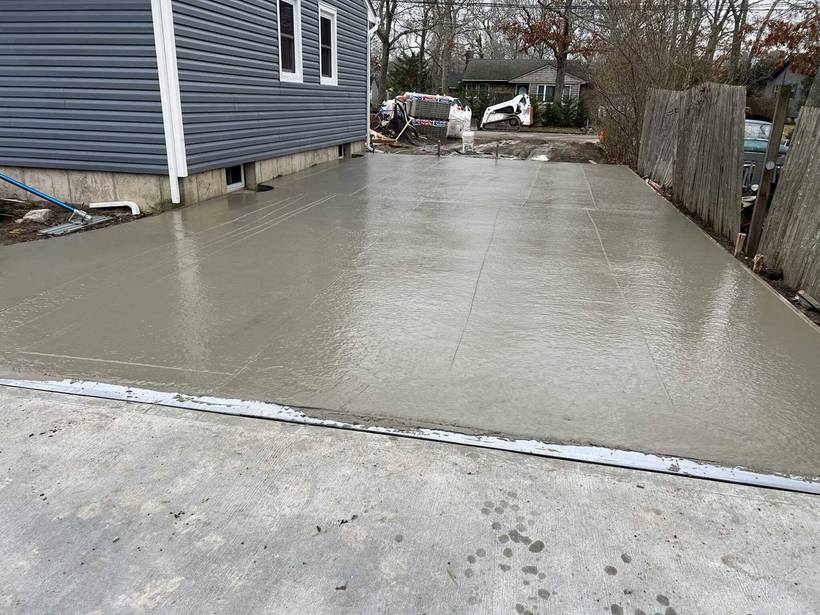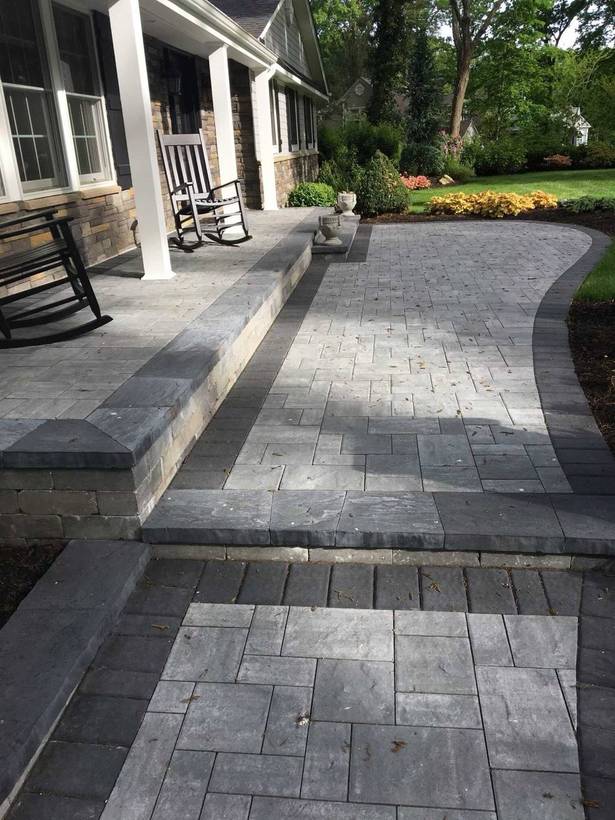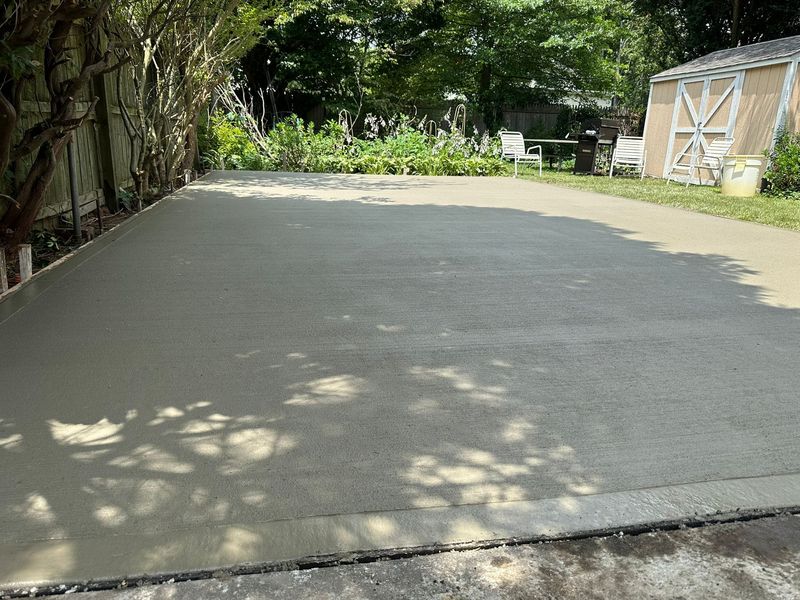
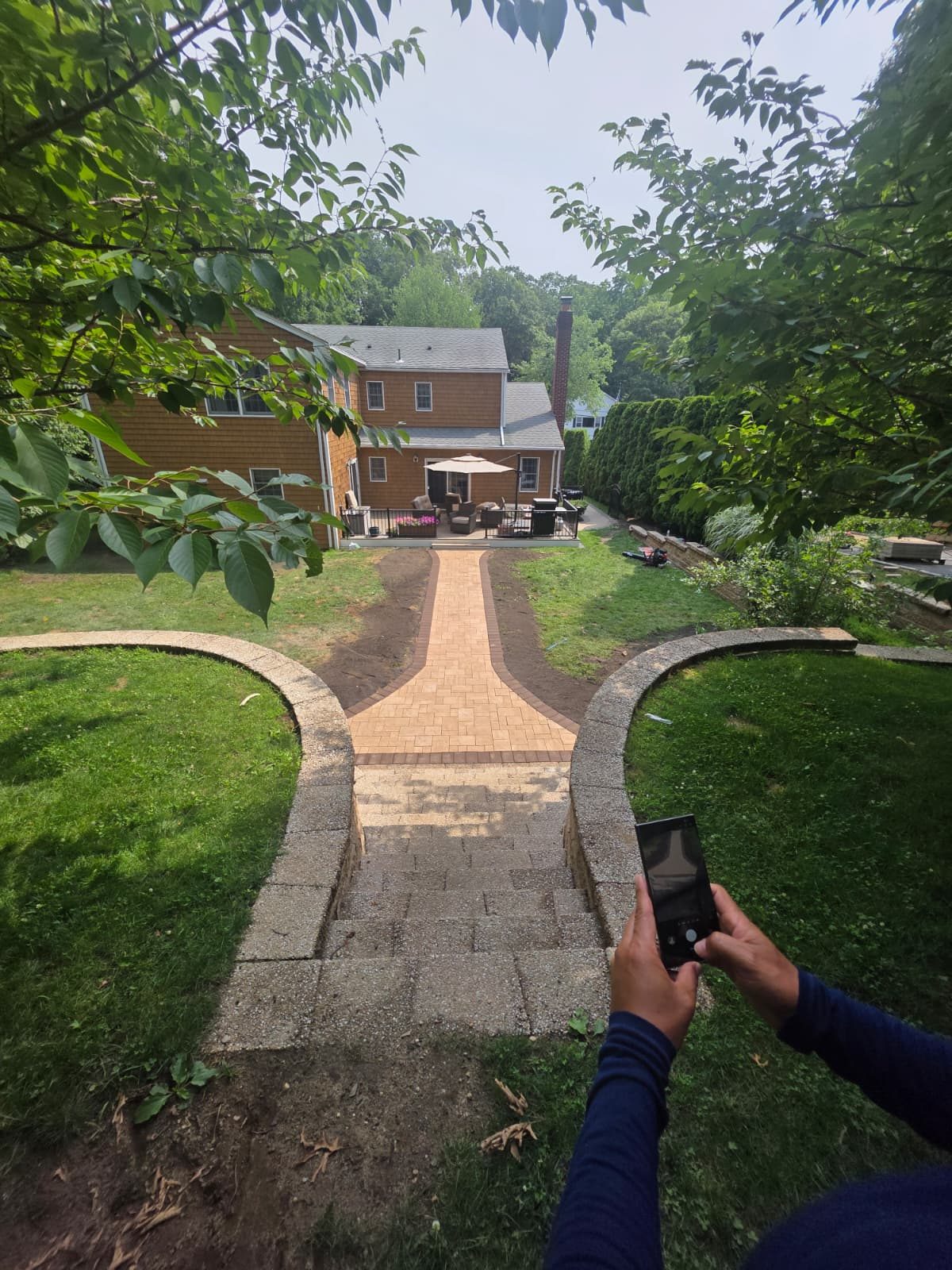
A broom finish is the simple, grippy, easy-to-repair choice for a front walk. Exposed aggregate gives a textured natural-stone look and good traction, but it takes more skill in the pour, more care in winter, and is harder to patch.
If you are picking a finish for a new front walk, the two names that come up most are broom finish and exposed aggregate. Both are real concrete, poured over a prepped base. The difference is what the top surface looks and feels like once it is done.
We pour walks, steps and concrete driveways around Centereach, Selden and Coram, and the finish question comes up on almost every walk. Here is how we think about it.
What is a broom finish?
After the concrete is leveled and floated, a stiff broom is pulled across the surface while it is still workable. That leaves fine ridges in the top.
It is the standard for a reason. It grips when wet, it hides small marks, and it is forgiving if the weather does not cooperate on pour day.
- Plain, clean look, like most sidewalks and driveways
- Traction comes from the ridges, so wet shoes hold well
- Easy to patch or resurface later without a mismatched look
- Takes sealer if you want added protection
What is exposed aggregate?
Concrete already has stone in it: sand, gravel or crushed rock mixed through. Exposed aggregate removes the thin cement layer on top so those stones show. A common method is to apply a surface retarder after finishing, then wash or brush the top layer away at the right time.
The result is a pebbly, natural-stone surface. Timing is the whole job. Wash too early and stones pull out. Wait too long and the surface stays flat and cloudy.
Which one has better traction?
Both can be safe underfoot. A good broom finish has a consistent, fine texture. Exposed aggregate has a rougher, uneven texture that grips well in the rain.
The catch is ice. Neither finish is ice-proof, and a rough surface can be harder to shovel clean, because the blade catches on the stones. If someone in the house has trouble with steps or balance, tell us when we visit. That can change the finish, the slope and the step detail.
How do they look at the front of a house?
Broom finish is quiet. It lets the house, the plantings and any stone veneer do the talking.
Exposed aggregate is a feature. The stone color shows through, so the choice of aggregate matters. It can look great with a natural-stone entry or veneer on the stoop. On a plain house, it can feel like more than you wanted.
Ask to see a sample in the stone you are considering. Wet stone and dry stone look very different.
What about upkeep?
This is where the two split most.
Broom finish
- Sweep and hose off as needed
- Reseal on a schedule if you chose to seal it
- Small chips and cracks are easy to repair
Exposed aggregate
- Sealing is usually recommended, because the open surface holds dirt and moisture
- Stones can loosen over time, especially where the surface was washed too hard or too early
- Patching is harder, because a repair rarely matches the original texture
- Leaf stains and dirt settle between stones and take more effort to clean
What should I know about winter?
Fall pours get tricky. Cold slows the set and changes the window for washing an exposed aggregate finish. We covered the basics in our post on cold-weather concrete pours. A broom finish is simpler to get right when temperatures are dropping, so it is often the safer call for a late-season pour.
Salt matters too. Fresh concrete is more vulnerable to deicers in its first winter, and rock salt can attack the surface of either finish. Our guide to a new concrete driveway's first winter explains what to use and what to skip. Sand or a gentle product is usually the better option on a young walk.
How do I choose?
Go with a broom finish if you want:
- The most forgiving option for traction
- Easy repairs down the road
- A late-season pour with fewer variables
- A clean look that matches the rest of the street
Go with exposed aggregate if you want:
- A textured, natural look at the entry
- A walk that stands out from the neighbors
- A crew with experience washing the surface at the right time
- Willingness to seal it and maintain it
What to ask any contractor
- Have you done exposed aggregate on a walk, and can I see one that has been through a few winters?
- How do you time the wash, and what happens if the weather turns?
- What base, thickness and joints are you planning?
- Will you seal it, and when does it need to be redone?
- How should I handle ice on this finish?
Finish is the last step. The base, drainage and joint layout under the walk decide whether it still looks good in ten winters, and that is where we start.
If you are planning a front walk, tell us which finish you are leaning toward and we will talk it through. We quote after a site visit, so reach out through the contact page and we will set one up.
Frequently asked questions
Is exposed aggregate slippery when wet?
Usually no. The rough stone surface tends to grip well in rain. Like any concrete, it can still be slick under ice or snow, so shovel and treat it with care.
Can exposed aggregate be poured in late fall?
It can be harder. Cold weather slows the set and shifts the timing for washing off the top layer. Ask your contractor how they would handle it, and whether a broom finish makes more sense this late in the season.
Does exposed aggregate need to be sealed?
Sealing is usually recommended because the open surface holds dirt and moisture. Ask your contractor which sealer they use and how often it should be redone.
Which finish is easier to repair?
Broom finish. A patch on a broom-finished walk blends in more easily. Matching the stone texture on exposed aggregate is difficult.
Can I use rock salt on a new walk?
It is best to avoid it in the first winter. Fresh concrete is more vulnerable to deicers, so sand or a gentler product is usually safer. Ask us when you book.