Closing the pool is a checklist job: lower the water, blow out the lines, add chemicals, put the cover on. The deck around it rarely makes the list. But the deck goes through the same winter the pool does, and the joints in it are where trouble usually starts.
Water that gets into a joint in November and freezes in January can lift coping, crack the deck and open the gap a little wider each year. A ten-minute walk-around before the cover goes on is the cheapest maintenance a pool deck in Suffolk County will ever get.
Why joints matter more around a pool
A pool deck is concrete or pavers sitting next to a very different structure: the pool shell. The shell, the coping on top of it and the deck all move differently with temperature and moisture. The joints between them are what let that movement happen without cracking.
NRMCA's guide to joints in slabs on grade (CIP 6) describes two kinds that matter here:
- Isolation (expansion) joints separate a slab from other parts of the structure so each can move independently. The joint between the coping and the deck is the most important one on a pool.
- Contraction (control) joints are planned weak lines that tell the slab where to crack as it shrinks. These are the cut or tooled lines across the deck.
Around a pool, both kinds also have a second job: keeping water out of the ground under the deck. A pool deck gets splashed all summer, and in fall it collects leaves and rain. Any open joint is a funnel.
Pool industry sources such as Gohlke Pools warn that water getting through the coping joint can contribute to soil movement and possible freeze damage to the tile, coping and the top of the pool wall. Treat that as a reason to check, not a prediction.
The walk-around, from the water out
Do this on a dry day, before the cover is on and before the first hard freeze.
1. The coping joint
Start at the edge of the pool and look at the joint where the coping stones or cast edge meet the deck. Walk the full perimeter. You're looking for:
- Sealant that has cracked along its length or hardened so it no longer gives when you press it.
- Sealant that has pulled away from the coping side or the deck side, leaving a hairline gap.
- Missing sections, especially at corners and steps.
- Weeds or dirt growing in the joint, which means water and debris are getting in.
- Sand or grout packed into the joint instead of a flexible sealant.
Gohlke Pools notes that mastic sealants typically dry out and separate every few years, so finding some wear isn't unusual. What matters is whether the joint is still sealed.
2. The coping itself
Next, look at the coping. Press on each piece. A coping stone that rocks or sounds hollow has lost its bond. Look for cracked mortar beds under the coping and gaps between coping stones. A loose coping stone is worth fixing before winter. Freezing water under it can lift it further.
3. Control joints in a concrete deck
Move out onto the deck and follow the control joints. If they were sealed, check the sealant the same way you checked the coping joint. If they are open saw cuts, make sure they aren't packed with debris that holds water against the concrete.
Also look for cracks that ignore the joints. NRMCA's guidance recommends maximum joint spacing of 24 to 36 times the slab thickness, with panels close to square. A crack running through the middle of a panel can mean the panel was too large or something moved underneath. Photograph it so you can compare in spring.
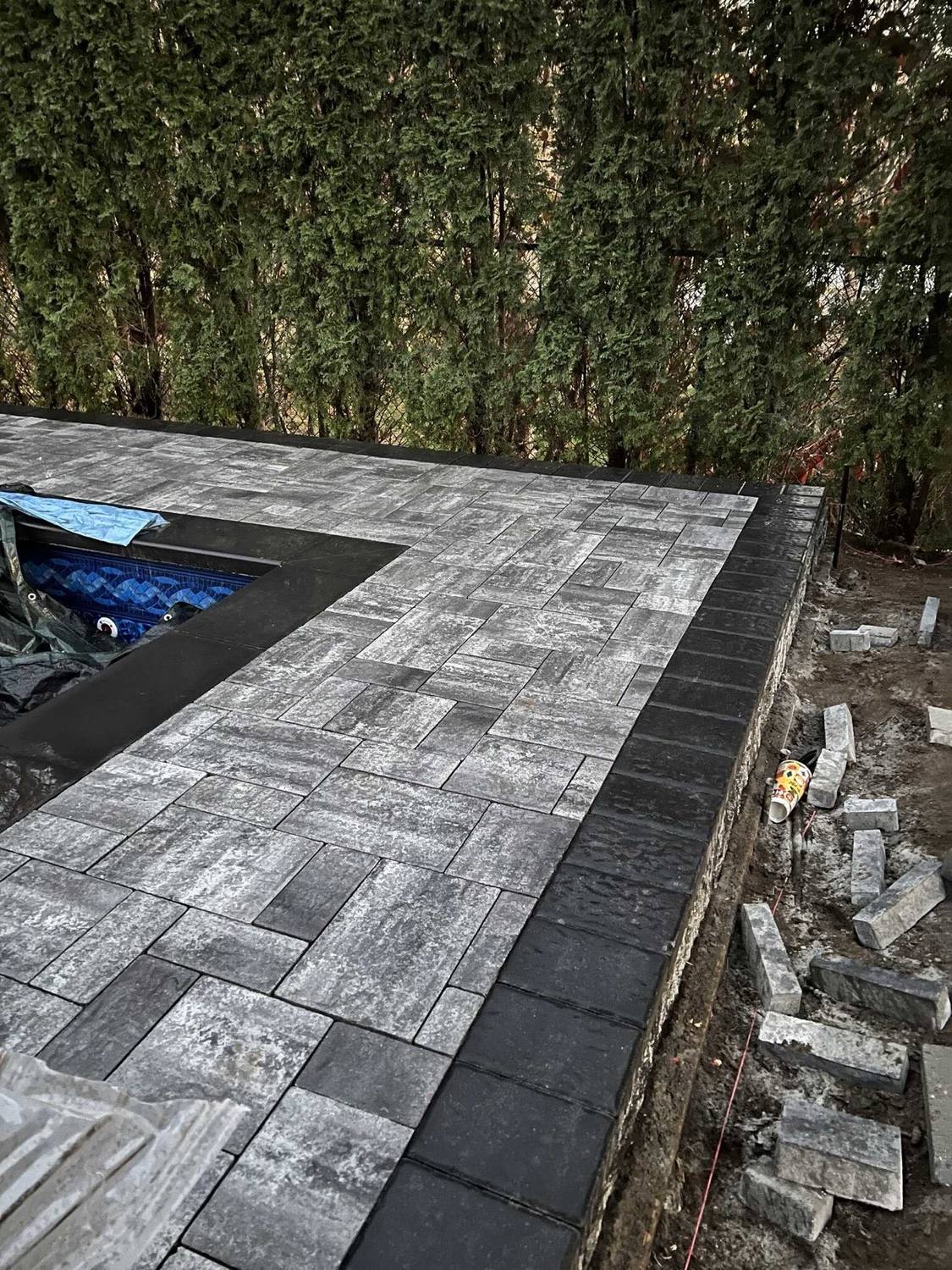
4. Joints in a paver deck
Paver decks rely on the joint material between units and a stable bed underneath. Check for:
- Joint sand washed out, leaving open gaps between pavers.
- Pavers that rock or sit lower than their neighbors.
- Gaps opening along the coping or along the edge restraint.
The Concrete Masonry & Hardscapes Association (CMHA), which now includes ICPI, says pavers made and installed to proper standards hold up well around saltwater pools, and that light salt residue is usually cosmetic and can be cleaned.
5. Where the water goes
Finally, look at the drainage. Does the deck pitch away from the pool and away from the house? Do any deck drains have leaves in them? Is there a low spot where water stands after rain? Water that sits on the deck in fall is water that will be ice in winter.
What to fix now and what can wait
Fix before winter, if the weather allows:
- Coping joint sealant that is open or separated. This is the highest priority.
- Loose coping stones.
- Clogged deck drains.
Watch and plan for spring:
- Hairline cracks with no displacement.
- Minor sanding needs in paver joints.
- Light surface wear or discoloration.
Sealant products have minimum temperature and dryness requirements. If the weather has turned, a temporary fix and a proper reseal in spring may be the right call. Follow the product instructions, including backer rod where the joint is deep. Forum discussions among pool owners consistently say the prep work, removing old sealant and cleaning the joint, is most of the job.
Winter care for the deck itself
Once the pool is closed, the deck becomes a slab sitting in the cold. The same guidance that applies to driveways applies here.
- Skip deicers if no one is using the deck. There's no reason to salt a pool deck nobody walks on.
- If you do need traction on a paver deck, ICPI's deicing guidance names sodium chloride as the preferred deicer and advises against magnesium chloride and calcium magnesium acetate. It also says not to use deicers in place of snow removal and to clear slush promptly.
- For concrete decks, NRMCA's scaling guide (CIP 2) warns against ammonium-based and magnesium-based deicers, and recommends breathable silane or siloxane sealers applied to reasonably dry concrete.
- Don't pile snow from the driveway or roof on the deck all winter.
Related reading
Most of the salt and sealer guidance for a deck mirrors what we cover in your new concrete driveway's first winter. If you're in the Village of Lake Grove and planning a pool surround, read who issues patio and driveway permits there, since the Village posts separate pool permit instructions.
Found open joints, loose coping or cracks on your deck? Call JDG Concrete & Construction at (631) 672-1618 or request a quote, and we can look at the deck before or after the pool closes.
Frequently asked questions
What is the joint between my pool coping and the deck for?
It separates the pool structure from the deck so each can move on its own. NRMCA describes isolation joints as letting slabs move independently of adjoining construction. Around a pool, that joint is usually filled with a flexible sealant to keep water out.
How often does the coping joint sealant need replacing?
There's no fixed schedule. Pool industry sources note that mastic-type sealants dry out and pull away over a few years. Check it every fall: if it's cracked, hard, or separated from either edge, it's time to have it redone.
Can I fill the deck joint with sand or regular caulk?
Pool owners and installers generally advise against sand in the coping joint because it holds water and doesn't flex. Use a sealant made for that joint, and follow the maker's instructions on prep, backer rod and temperature.
Is it safe to use salt on a paver pool deck in winter?
ICPI guidance favors sodium chloride over magnesium chloride and calcium magnesium acetate, and says to use deicers sparingly and remove snow and slush promptly. If the deck isn't used in winter, the simplest choice is not to salt it at all.