Concrete steps flake when freeze-thaw cycles and deicing salt break down the thin top layer of the surface. If the steps underneath are solid and level, a resurface or a bluestone cap can work; if they are cracked through, sinking or pulling from the house, they usually need to be rebuilt.
Flaking steps are one of the most common winter complaints we hear from homeowners around Centereach, Selden and Coram. The surface turns rough, pebbles show through, and every freeze makes it a little worse.
The good news is that scaling alone does not always mean the steps are finished. The real question is what is going on underneath. That decides whether you resurface, cap or rebuild, and it is the first thing we look at on a stoop and steps site visit.
Why do concrete steps flake in the first place?
Concrete is porous. Water soaks into the top layer, freezes, expands and pushes off a thin skin of cement paste. That is scaling. On Long Island we get plenty of freeze and thaw cycles in a single week, so the damage adds up fast.
Deicing salt makes it worse. Salt keeps water liquid longer at the surface and sends the surface through more freeze-thaw cycles. It also gets tracked onto steps from boots, cars and shovels.
A few other things make steps more likely to scale:
- Concrete that was overworked or finished with too much water on the surface
- Concrete that was not given enough time to cure before its first winter
- Steps that hold water because they are flat or slope toward the house
- No sealer, or a sealer that has worn off
- Late-season pours that got hit by an early freeze
Industry groups such as ACI and PCA publish guidance on all of this. If you want to dig into it, ask us and we will explain what applies to your steps.
Scaling, spalling and cracking: what is the difference?
These get mixed up, and the difference matters for the repair.
- Scaling is a thin, flaky loss of the top surface. The steps are still flat and solid.
- Spalling is deeper. Chunks break off, often at edges and corners, and sometimes rebar is showing.
- Structural cracking runs through the step, shifts one piece against another, or lets a gap open at the house wall.
Scaling is the best case for a surface fix. Spalling and structural cracks usually are not. If you want help reading cracks, our post on rebuilding or resurfacing an older Centereach stoop walks through what each pattern means.
Option 1: Resurfacing with an overlay
An overlay is a thin, bonded layer of cement-based material applied over the old surface. It can be finished smooth, broomed or textured.
It makes sense when:
- The steps are level, solid and tight to the house
- The damage is limited to surface scaling
- Rise and run are already comfortable and consistent
- You want to keep the look of poured concrete
The catch is that an overlay is only as good as the bond underneath. The old surface has to be cleaned and prepared properly, and loose material has to come off first. If the base is moving, cracked through or holding water, the overlay will fail along the same lines.
Weather matters too. Cement-based overlays need suitable temperatures to cure, so this is not a repair to force in a deep freeze. We will tell you honestly if the work should wait for milder weather.
Option 2: Capping with bluestone
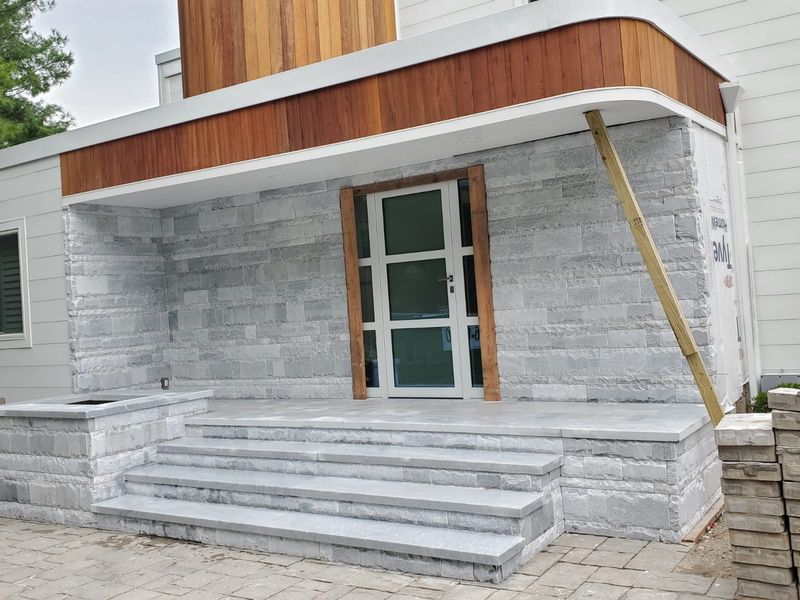
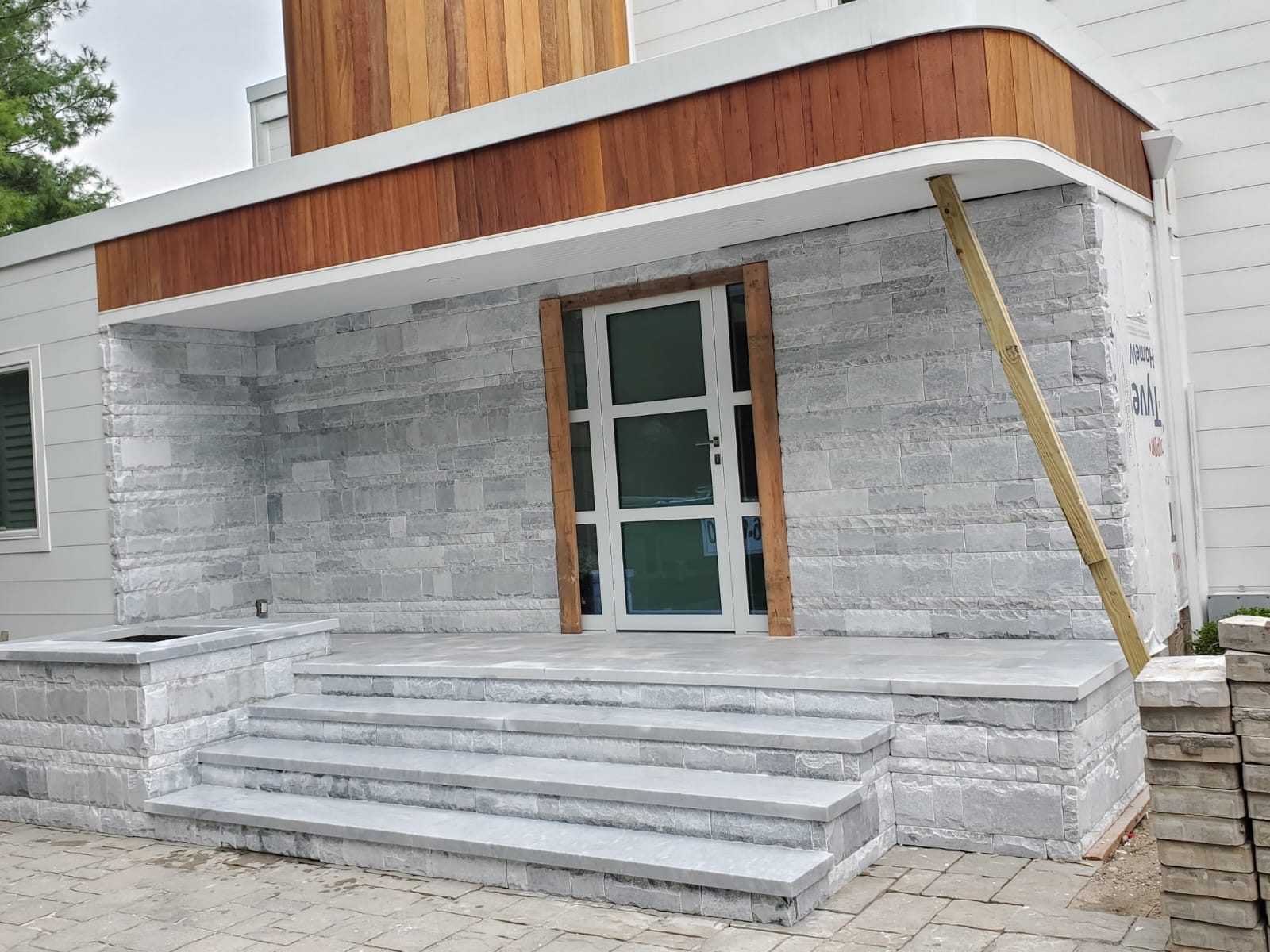
A bluestone cap means setting natural stone treads, and often risers, over a sound concrete base. It is a solid choice when you want a better look, better traction and no worry about the surface flaking again.
It works well when:
- The concrete underneath is structurally sound and stable
- You want a more finished entry for guests
- You are also doing stone veneer on the stoop or walls
Because a cap adds thickness, step heights change. Riser height, tread depth, landings and railings can all be affected, and your town may have rules about them. Check with the Town Building Division before work starts, and ask any contractor how they will handle the finished heights.
Cap work also depends on a good base. Stone does not fix a sinking step. It just sits on top of the problem.
Option 3: Replacing the steps
Rebuilding means demolition, new base preparation, forms, reinforcement as needed and a fresh pour or a new stone-faced structure. It is the most work, and sometimes it is the only honest answer.
Plan on replacement if:
- Steps are cracked through or broken into separate pieces
- The stoop has settled or tipped, or is pulling away from the house
- Tapping with a hammer gives a hollow sound in several areas
- The step heights are uneven enough to be a trip hazard
- Water has been getting behind the steps and into the wall
On that last point, check where the siding or door threshold meets the stoop. Our post on siding rot at the stoop junction explains why that area traps water. If we are rebuilding, it is the right time to fix the water path too.
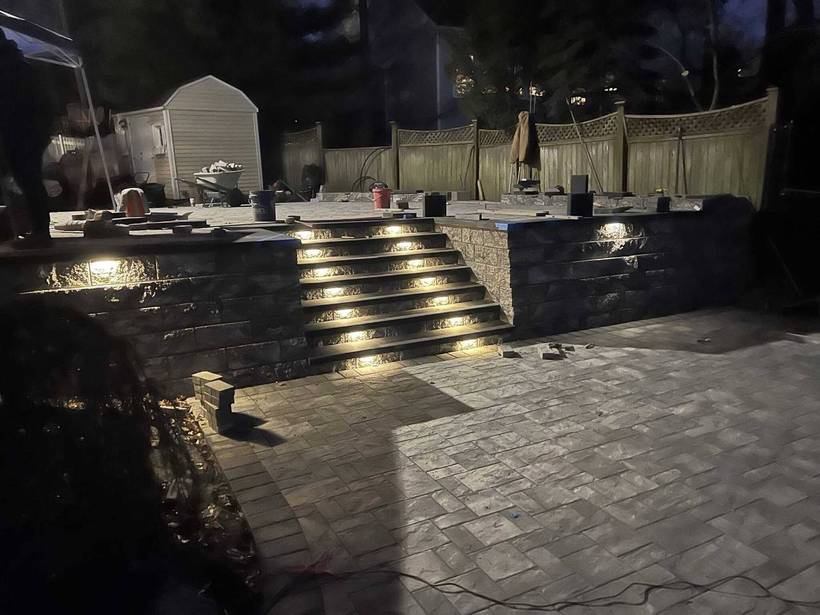
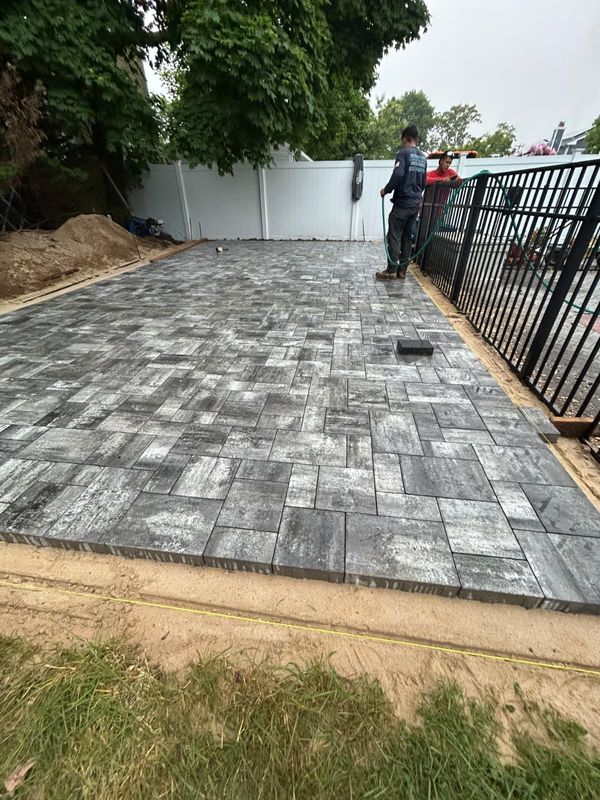
Rebuilding is also where our foundation-first approach pays off. Drainage, compaction and base depth decide whether the new steps last or repeat the same problem.
How do you choose?
Run through this quick check on a dry day:
- Look at the step heights. Are they even from bottom to top?
- Check the gap where the stoop meets the house. Is it widening?
- Look for cracks that go all the way through, not just across the surface.
- Tap the surface and listen for hollow areas.
- Watch where water goes when it rains. Does it drain away or sit?
If everything is solid and the problem is just surface scaling, an overlay or cap is on the table. If anything on that list is a fail, plan on a rebuild or at least a repair of the base before any finish goes on.
Tip: Take photos of the steps now, in daylight, from the front and side. They make it easier to compare before and after a hard winter, and they help us talk through options before the visit.
What can you do right now to protect scaled steps?
You may not be able to do the repair before winter. Here is how to limit further damage:
- Use sand or traction grit instead of rock salt where you can
- Shovel snow early so it does not melt and refreeze on the steps
- Keep downspouts and gutters pointed away from the stoop
- Sweep off standing water when you can
- Ask before applying a sealer over damaged concrete, because trapping moisture can cause more trouble
Many deicers can be rough on concrete, and some are harsher than others. If you have a new concrete driveway or walk, our post on a new driveway's first winter covers salt and sealer in more detail.
What to ask a contractor before you sign
- What is causing the scaling, and how do you know?
- Is the base solid enough for an overlay or cap?
- How will step heights change, and will that affect the railing or landing?
- Does the work need a permit in my town?
- What happens if the weather turns before the job is done?
We do not give numbers over the phone for steps. We quote after a site visit, because the right fix depends on what is under the surface.
If your steps are flaking in Centereach, Selden, Coram or nearby, contact us to set up a visit. We will look at the steps, tell you which of the three options fits, and explain why.
Frequently asked questions
Can I just seal flaking concrete steps?
Sealer will not repair scaling, and putting it over damaged or wet concrete can trap moisture. It is better used on sound concrete as protection. Have the steps looked at first.
Is a bluestone cap better than an overlay?
Neither is better in every case. A cap gives a more finished look and traction but changes step heights, while an overlay keeps the concrete look and works best on level, solid steps with surface damage only.
Can steps be repaired in cold weather?
Some work can be done, but cement-based products need suitable temperatures to cure. We will tell you if a repair should wait for milder weather.
Do I need a permit to replace or cap my steps?
It depends on the town and the scope of work. Check with your Town Building Division, and ask us when you book so we can talk through it.
How do I keep my steps from scaling again?
Keep water draining away, limit rock salt, and make sure the concrete is sound and properly finished. A good base and drainage matter as much as the surface.